.png)

Marketing Automation Tools: The 10 Best Platforms to Scale Businesses in 2026
.png)

.png)

What is Marketing Automation in 2026?
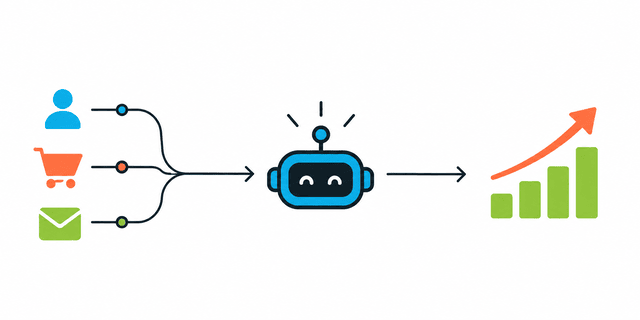
Marketing automation in 2026 is an AI-driven software architecture that uses AI to coordinate customer behavioral data and first-party intent signals. It connects Customer Data Platforms (CDPs) and APIs to run automated campaigns across email, SMS, and search engines. In 2026, these tools prioritize privacy compliance, server-side tracking, and answer engine optimization (AEO).
Key Takeaways
- Marketing automation in 2026 centers on Growth Hacking 3.0, prioritizing deep operationalization, first-party databases, and answer engine optimization (AEO) to combat third-party cookie deprecation.
- Leading tools like HubSpot, ActiveCampaign, ClickUp, and Klaviyo scale business operations by automating customer journeys, real-time data tracking, and zero-party data collection.
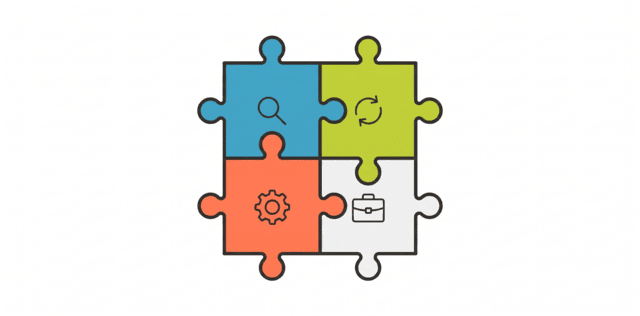
- Selecting the right software starts with matching the business’s most urgent need to one of four practical categories: inbound discovery, lifecycle retention, operational coordination, or account intelligence.
- Successful automation requires overcoming challenges like large language model hallucinations and tool sprawl by implementing structural validation layers and continuous adoption monitoring.
Enterprise Marketing Automation Trends in 2026
Enterprise marketing automation trends center on third-party cookie deprecation, deep operationalization, and search everywhere habits. Organizations prioritize growth hacking 3.0 strategies by employing server-side tracking, first-party databases, and answer engine optimization to capture real-time intent across discovery platforms.
- Shift to Deep Operationalization
With deep operationalization, software and AI are moving from speculative testing into daily company workflows as a mandatory baseline for efficiency. This framework helps teams move away from slow manual systems to build a standard workplace setup that removes operational friction.
- Transition to Growth Hacking 3.0
Under growth hacking 3.0, marketing strategies combine real-time data with authentic human branding to target real profit margins instead of just high traffic volumes. This structure helps managers evaluate platforms based on their ability to cut customer acquisition costs and build steady, predictable revenue.
- The Cookieless Paradigm
In the cookieless era, the total elimination of third-party tracking cookies forces companies to shift toward first-party databases (owned information collected directly from the audience) and server-side tracking (tracking user behavior directly through the operational server instead of the web browser).
Operations teams can use this analysis to maintain legal compliance with state privacy rules while gathering data safely through voluntary user consent.
- Emergence of Search Everywhere Habits
Driven by search everywhere habits, product discovery now happens simultaneously across social media shops, visual search apps, smart speakers, and generative intelligence chat interfaces.
Reviewing these behaviors allows organizations to protect online visibility by selecting tools that structure product catalogs for semantic machine readability and answer engine optimization.
The 10 Best Marketing Automation Platforms to Scale Operations in 2026
Scaling operations requires choosing platforms such as HubSpot, ActiveCampaign, ClickUp, Brevo, Zapier, Salesmotion, Braze, Drip, Wyng, and Klaviyo. These tools address different needs, including customer acquisition, lifecycle messaging, internal workflow coordination, account research, and consent-based data collection.
Before comparing individual platforms, identify the main problem the business needs to solve. This helps teams avoid paying for a broad set of features when a more focused tool may meet their immediate needs.
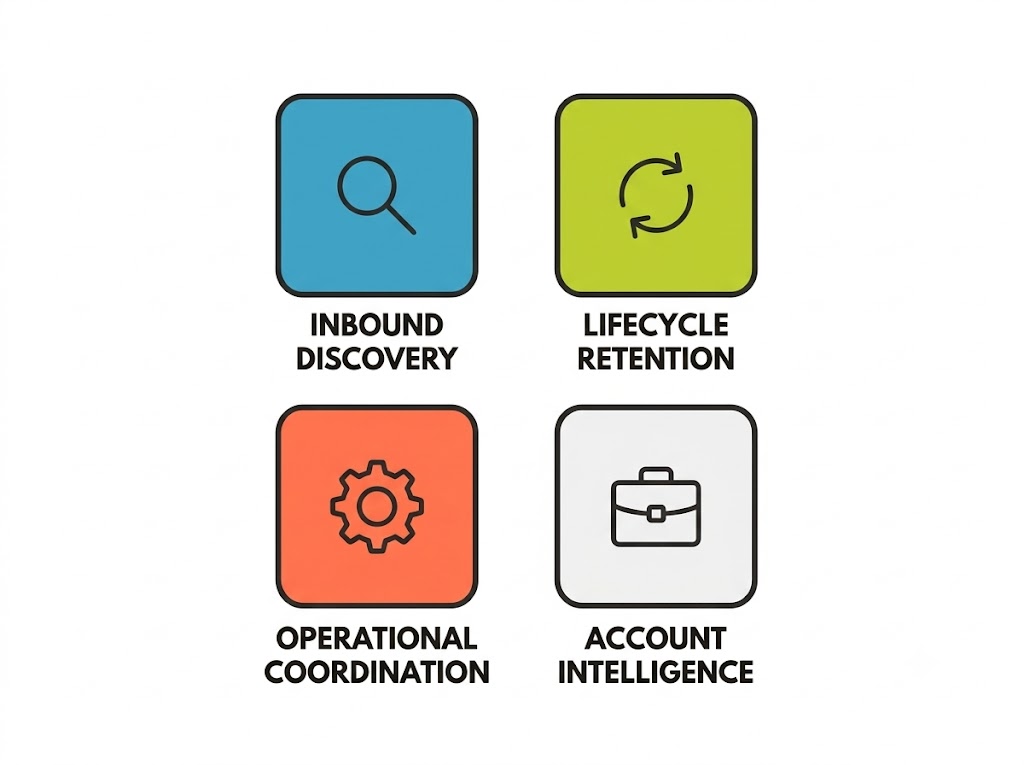
- Inbound Discovery
Choose this category when the main priority is helping potential customers find the business through search engines, content, and AI answer platforms.
- Lifecycle Retention
Choose this category when the business needs to onboard new users, nurture leads, recover abandoned carts, or keep existing customers engaged.
- Operational Coordination
Choose this category when employees spend too much time transferring information between applications, assigning tasks, or managing handoffs between departments.
- Account Intelligence
Choose this category when sales teams need timely company updates, prospect research, and reliable account data to support personalized outreach.
With these priorities in mind, the following platform reviews explain each tool’s primary use case, core automation features, and potential business impact.
1. HubSpot: Omnichannel Campaigns and AI Search Optimization
HubSpot provides an agentic customer platform that unifies marketing, sales, and service software to scale personalized campaigns and optimize brand discoverability across major answer engines.
- Tracks brand visibility across conversational artificial intelligence engines using automated answer engine optimization (AEO) tools.
- Unifies omnichannel tracking records inside an intelligent client relationship database to fuel lead generation, manage franchise assets, and compile data insights across multi-location dashboards.
- Global marketplace networks achieved top positions across primary answer platforms, while large fitness brands automated hyper-targeted regional communications across hundreds of locations to coordinate millions of incoming customer leads successfully.
Case Study: Crunch Fitness
Local gym franchisees Crunch Fitness struggled with slow corporate marketing approvals and rigid red tape. By deploying HubSpot Marketing Hub and the Breeze Assistant tool, local outlets automated content creation and audience segmentation.
Franchisees now launch regional campaigns in minutes, capturing over two million leads annually.
2. ActiveCampaign: Behavioral Segmentation and Email Journeys
ActiveCampaign utilizes strategic customer journey automation and predictive intelligence to deliver highly targeted email, text, and chat messaging streams.
- Employs an intuitive visual chart builder to design conditional automation tracks, multi-step customer journeys, and automated email cadences.
- The software leverages open application programming interfaces (APIs) to track real-time user milestones during trial onboarding, assign dynamic lead scores, and implement automated send-time optimization based on historical performance datasets.
- Solo health operators increased email open rates from below-average levels to well above industry benchmarks through audience segmentation and personalized messaging, without external consultant support. Meanwhile, product-led software companies integrated application tools to double free-to-paid subscriber conversion rates.
Case Study: Motrain
Motrain lacked automation tools to track user behavior during free trials. Implementing ActiveCampaign CRM tools and API integrations enabled behavior-based customer journeys and simplified Calendly scheduling.
Motrain reported open rates of 20% to 40% for its automated email flows after implementing ActiveCampaign. Its free-to-paid conversion rate also increased from under 10% to over 20%.
3. ClickUp: Project Management and Workflow Automation
ClickUp functions as an integrated workplace productivity platform that centralizes project documentation, tasks, and communications into a single converged hub.
- Consolidates operational documentation, procedure files, and team communication threads into an integrated workspace hub to eliminate tool sprawl.
- The technology utilizes custom fields and autonomous tracking agents to scan incoming emails, evaluate task priorities, and execute automated task routing across creative and technical departments without human intervention.
- Large financial software corporations reported a total improvement in go-to-market workflow visibility, while next-generation fintech platforms saved twenty project hours per week by completely automating creative handoffs.
Case Study: Finastra
Fragmented go-to-market plans in Finastra, scattered across spreadsheets and slide decks, obstructed leadership visibility. The corporation unified marketing divisions by adopting ClickUp list templates, customized regional views, and automatic push notifications. This workspace optimization successfully unlocked a 40 percent growth in total operational planning efficiency.
4. Brevo: User Onboarding and Lifecycle Retention
Brevo offers a scalable email and marketing platform built to orchestrate high-volume transactional messaging networks and retention workflows.
- Manages high-volume transactional messaging networks, account update channels, and multi-channel marketing campaigns from a centralized interface.
- The pipeline streams real-time user events directly from application tracking systems to trigger immediate welcome paths, automated spaced-repetition reminders, and targeted premium subscription upsell journeys.
- Digital EdTech services scaled infrastructure to support thousands of active app users, utilizing automated learning streak notifications designed to mitigate user churn and improve long-term platform retention.
Case Study: Jurafuchs
Legal education app Jurafuchs struggled to keep free users consistently engaged with daily study goals. Utilizing Brevo email tools alongside a Fullstory data integration, the digital education service scaled their infrastructure to support thousands of active app users, using automated learning streak notifications designed to mitigate user churn and improve long-term platform retention.
5. Zapier: No-Code App Integration and Ad Optimization
Zapier connects separate business software platforms without code by orchestrating automated webhooks, data synchronization loops, and multi-step logic pathways.
- Unifies separate business applications without developer code by orchestrating automated webhooks, conditional logic pathways, and instant data synchronization loops.
- The system feeds real-time customer relationship milestones directly into external advertising conversion interfaces to optimize digital ad targeting.
- Performance marketing managers unlocked four times faster ad testing cycles and saved ten hours weekly by driving ad spend decisions based on actual corporate revenue rather than unverified form fills.
Case Study: Synthesia
Synthesia initially gained high traffic from free software tools, which generated unqualified leads, stalling Facebook ad optimization. Marketing teams used Zapier no-code automation to feed active customer database events directly into the Facebook Conversions API. This process allowed for four times faster ad testing while saving ten operational hours weekly.
6. Salesmotion: B2B Account Intelligence and Outbound Messaging
Salesmotion concentrates on real-time account intelligence to optimize strategic business-to-business prospecting and sales execution.
- Gathers real-time account data from scattered public databases, corporate earnings updates, and executive personnel shifts into a single view.
- The system runs machine learning models to extract relevant business triggers and automatically draft personalized outreach text and messaging hooks for sales teams.
- Global analytics providers reduced manual business development research times by 85 percent, accelerating high-stakes deal preparation and lifting quarterly qualified opportunities.
Case Study: Analytic Partners
Analytic Partners wasted hours manually searching disparate websites to prepare for enterprise client meetings. The organization embedded Salesmotion directly into Salesforce workflows to generate automated earnings reports and artificial intelligence talking points. Manual research durations plummeted to fifteen minutes, increasing qualified opportunities by 40 percent.
7. Braze: Mobile-First Engagement and Multi-Channel Journeys
Braze operates as a customer engagement platform engineered for large enterprise marketing teams, optimizing real-time consumer interactions.
- Focuses heavily on high-impact, mobile-first marketing automation built for scalable consumer applications.
- Maximizes mobile app retention using centralized event tracking, transactional push notifications, and dynamic in-app messaging screens.
- Deploys multi-channel messaging pathways natively across mobile push alerts, in-app notifications, and web channels.
Case Study: Crumbl
Rapid scaling past 1,000 bakeries caused channel silos and restricted personalized engagement for Crumbl. By adopting the Braze platform and Canvas tools, Crumbl launched an interactive SMS quiz deep-linked to their application.
This process yielded a 373% higher conversion rate, with 82% of recipients opening the app within forty-eight hours.
8. Drip: E-commerce Marketing Automation and Behavioral Flows
Drip specializes in e-commerce lifecycle marketing automation to design behavior-triggered messaging paths and multi-channel customer flows.
- Maps custom multi-channel messaging arrays directly to direct-to-consumer storefront activities, tracking client motivations across distinct funnel stages.
- The software runs automated shopping cart recovery sequences, dynamic list segmentation updates, and personalized on-site pop-up alerts on autopilot.
- Consumer grooming brands scaled online storefront operations to achieve predictable monthly recurring revenue benchmarks by aligning automated content with specific informational queries.
Case Study: Beardbrand
BeardBrand startup needed to build digital category awareness and maintain predictable subscription revenue. The brand mapped informative text and video content across the sales funnel, using Drip software to execute behavioral cart recovery sequences. The online store successfully grew to clear major monthly revenue milestones.
9. Wyng: Zero-Party Data Collection and Personalization
Wyng creates preference-based personalization frameworks by capturing zero-party user details willingly and transparently shared by consumers.
- Powers consent-led data gathering workflows using interactive diagnostic profiling quizzes, post-purchase feedback forms, and structured preference hubs.
- The system embeds custom data relevance windows, automatically prompting users to update details the moment skin types, color tastes, or seasonal context records expire.
- Multinational cosmetics conglomerates secured an improvement in digital conversion rates and grew average order values by substituting unverified tracking loops with transparent, rewarding value exchanges.
Case Study: L'Oreal UK
The global cosmetics brand L'Oreal UK needed to increase subscription opt-ins and replace presumptive data tracking options. By launching interactive diagnostic profiling quizzes through the Wyng customer preference platform, the company captured zero-party user records. This transparent strategy increased order valuations by 134 percent.
10. Klaviyo: Lifecycle Data and E-commerce Customer Retention
Klaviyo provides data-driven retention infrastructure that pairs deep direct-to-consumer data models with automated lifecycle communications.
- Builds highly detailed direct-to-consumer data profiles by combining historic purchase patterns with real-time website behavior tracking.
- The infrastructure coordinates automated behavior-triggered text messaging loops and targeted, full-lifecycle email flows tailored to distinct buyer cohorts.
- Global beverage and hydration startups expanded local market footprint and lifted customer retention metrics by executing automated lifecycle retention frameworks within a twelve-month window.
Case Study: Waterdrop
Waterdrop entered a new consumer marketplace with zero existing customer awareness. Marketing teams constructed a complete digital acquisition machine using paid advertising channels alongside Klaviyo lifecycle flows. This retention framework generated millions in revenue and yielded a 79 percent retention uplift.
Marketing Automation Software Comparison Summary
Marketing platforms serve distinct functional purposes depending on the core operational architecture of a business:
How to Choose a Marketing Automation Platform
Selecting marketing automation software requires mapping immediate operational needs to functional utility groups. Organizations must review readiness checklists and coordinate structural step-by-step frameworks to connect platforms into an unfragmented technology stack.
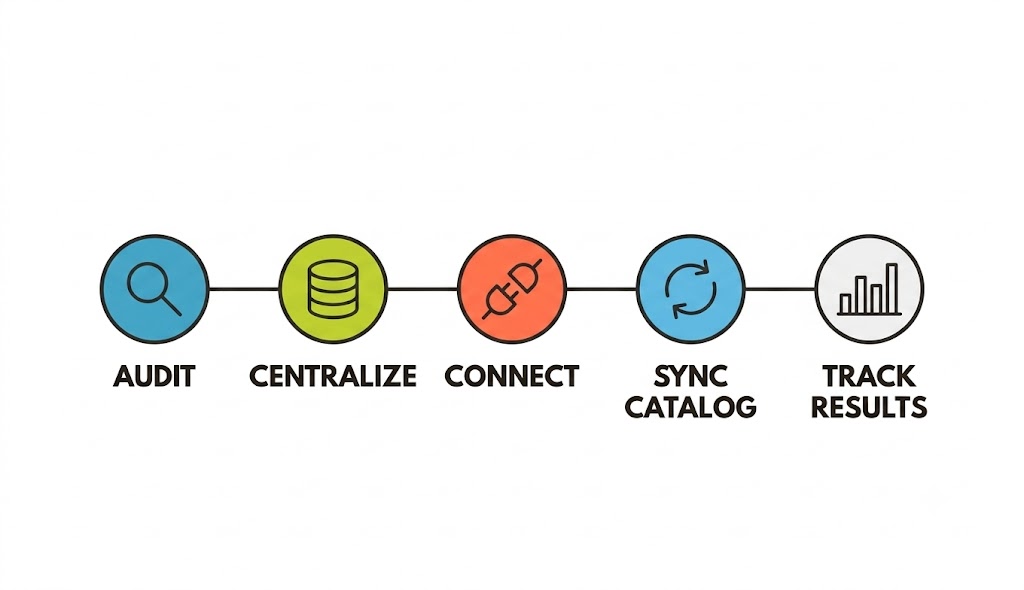
Build an Automated Marketing Tech Stack
- Step 1: Audit software tools and operational gaps: Identify overlapping software applications and unlinked spreadsheets to isolate specific workflow bottlenecks.
- Step 2: Centralize client profiles into one database: Establish a unified repository using a core platform to safely house all customer relationship records.
- Step 3: Connect communication channels via application interfaces: Connect email software and text channels directly to the database using open interfaces to end manual entry.
- Step 4: Sync catalog details across storefronts: Link operational product details and inventory records to keep information consistent across sales channels.
- Step 5: Track campaign results inside unified analytical dashboards: Deploy connected reporting dashboards to monitor the loop between marketing spend and incoming revenue.
Checklist for Identifying Automation Needs
- [ ] Prospects research products using conversational artificial intelligence chat engines.
- [ ] Customer leads regularly drop off after starting free trials or downloading content.
- [ ] Employees spend hours typing information manually between separate applications and spreadsheets.
- [ ] Sales representatives waste considerable time tracking target company changes across fragmented websites.
- [ ] Company data resides inside an active client relationship database rather than individual employee notes.
- [ ] Corporate marketing budgets prioritize unit economic profitability margins over superficial web traffic metrics.
Three Common Operational Challenges in Marketing Automation
Operational challenges stem from large language model hallucinations, tool multiplicity, and supply chain distribution disconnects. Teams overcome these hurdles by building deterministic validation layers, consolidating software stacks, and using automated campaign dampening to handle inventory fluctuations safely.
Mitigating AI Hallucinations in Automated Content
- Structural Validation Layers: Automated content systems require deterministic validation protocols to audit generated outputs prior to public delivery.
- Factual Grounding Checks: Implementing specific retrieval architectures to ensure marketing automation engines rely on citable corporate facts rather than model inference.
Solving Context Sprawl and Tool Multiplicity
- Reduction of Tool Sprawl: Overlapping software deployments fragment critical customer information and waste significant engineering resources.
- Continuous Adoption Monitoring: Platforms fail when interface layouts are too complex, pushing teams back toward unaligned, manual communication processes.
Connecting Supply Chain Visibility to Automated Campaigns
- The Distribution Risk Baseline: Disconnects between operational supply chains and front-end marketing engines generate erratic inventory flows and costly out-of-stock events.
- Automated Promotion Dampening: Advanced tech stacks must automatically pause active advertising campaigns the moment inventory visibility indicates warehouse capacity bottlenecks or product depletion.
Final Thoughts
To successfully scale operations using marketing automation, organizations can implement these actionable next steps:
- Identify overlapping applications and unlinked spreadsheets to eliminate costly tool sprawl and workflow bottlenecks.
- Establish a unified customer relationship database to safely house all primary user records.
- Structure product catalogs to ensure semantic readability for modern generative AI search platforms.
- Deploy interactive profiling quizzes and preference hubs to collect transparent, consent-led audience details.
- Integrate inventory tracking with front-end marketing engines to automatically pause promotional campaigns during warehouse shortages.
Frequently Asked Questions (FAQs)
What is Growth Hacking 3.0?
It is a framework combining real-time data with authentic human branding to target actual profit margins and reduce customer acquisition costs.
How do businesses handle third-party cookie deprecation?
Organizations are transitioning to first-party databases and server-side tracking to collect customer information safely through voluntary user consent.
What are "search everywhere" habits?
This refers to consumers discovering products simultaneously across social media shops, visual search apps, smart speakers, and generative AI interfaces.
How can teams prevent AI hallucinations in marketing?
Companies can implement structural validation layers and factual grounding checks to ensure automated systems rely strictly on verified corporate facts.
Read These Next
AI Marketing Automation: How to 10x Your Output with Machine Learning