Brand Marketing vs Performance Marketing: Finding the Perfect Balance




Brand marketing builds long-term demand by making a company recognizable and trusted before customers are ready to buy. Performance marketing captures existing demand through measurable actions such as clicks, leads, or purchases. In modern marketing, sustainable growth usually requires both, because performance converts interest while brand ensures future demand exists.
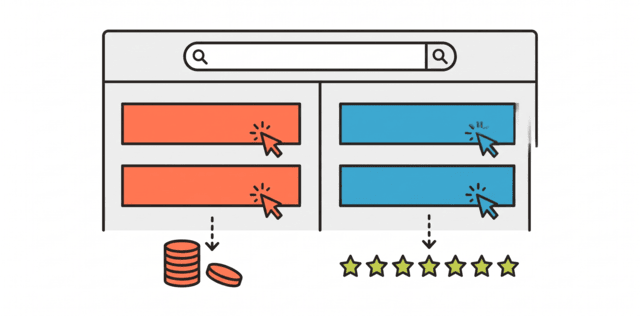
Brand marketing and performance marketing are often described as competing approaches, but in practice, they serve different roles. Brand marketing focuses on long-term awareness and trust, while performance marketing focuses on measurable results such as conversions, leads, or sales. In 2026, this balance has become more important because privacy changes and cookie restrictions reduce the effectiveness of pure performance targeting, making brand familiarity more valuable before a customer even begins searching.
What This Guide Covers
- What brand marketing means
- What performance marketing means
- How brand and performance work together
- How privacy changes affect the balance
- What happens when the mix is wrong
- Why the right balance depends on context
- What happens when the balance is wrong
- Why the right mix is different for every company
- Common misunderstandings
- How modern marketing measurement affects the balance
What Is Brand Marketing?
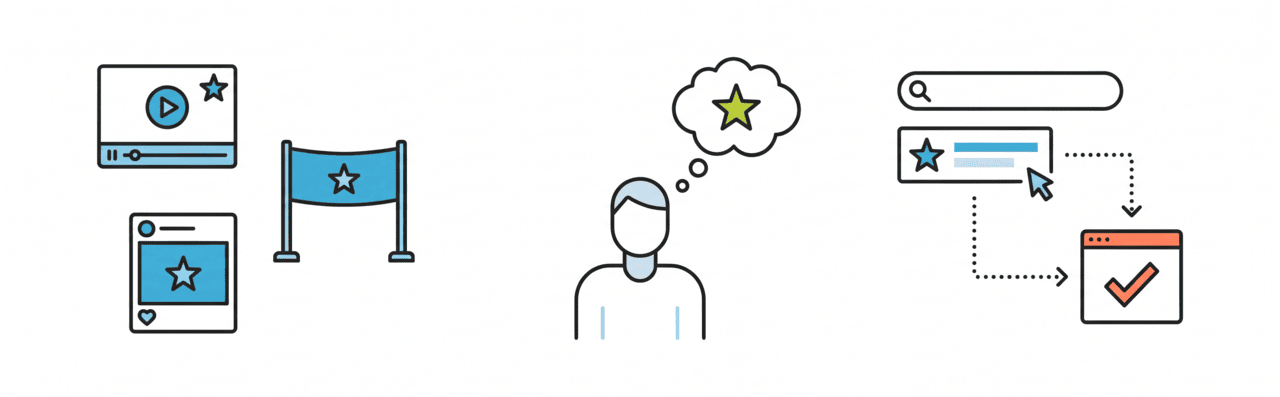
Brand marketing builds demand by making a company recognizable before a buying decision happens. Instead of focusing on immediate action, the goal is to create familiarity, credibility, and preference over time.
When customers repeatedly see the same brand, they become more likely to trust it later, even if they are not ready to buy immediately. This effect is difficult to measure in the short term but often influences long-term performance.
Common brand marketing activities include:
- Advertising campaigns
- Sponsorships and partnerships
- Public relations
- Educational content
- Consistent visual identity
- Long-term social media presence
These activities may not produce instant conversions, but they increase the chance that performance campaigns will work later.
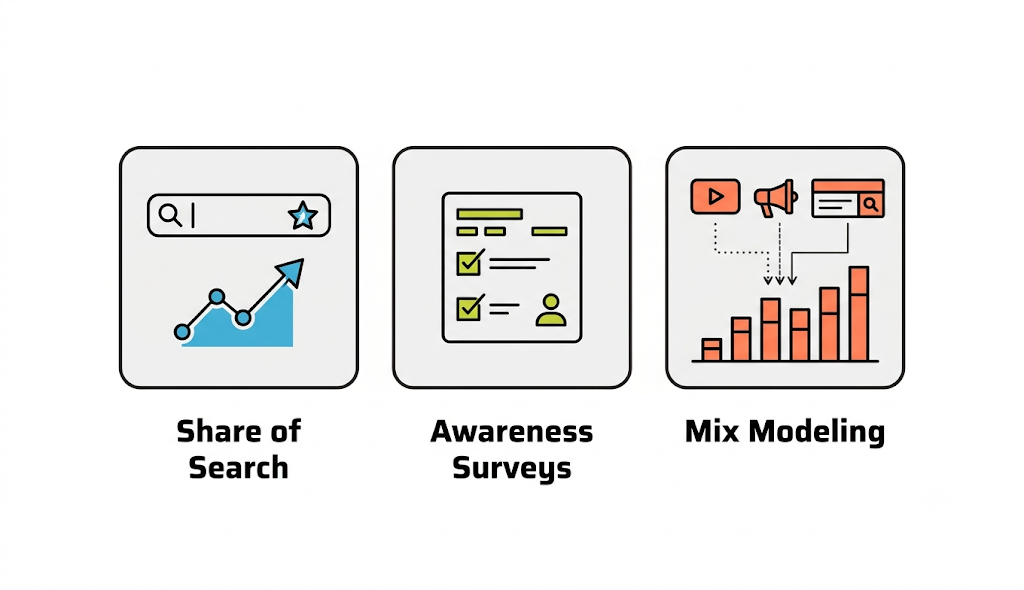
In modern marketing analysis, brand impact is often measured using indirect signals such as Share of Search, awareness surveys, or Marketing Mix Modeling (MMM), which estimates how different channels contribute to growth without relying on cookies. Google’s Data-Driven Measurement Report (2025) confirms a 212% year-over-year increase in MMM adoption since 2023, as teams shift toward privacy-safe measurement methods.
What Is Performance Marketing?
Performance marketing captures existing demand by targeting people who are already searching, comparing, or ready to act. Campaigns are evaluated using measurable results such as clicks, leads, or purchases.
Common performance channels include:
- Search advertising
- Paid social media
- Retargeting
- Affiliate marketing
- Email campaigns
These channels allow detailed tracking, which makes it possible to measure conversion rate, cost per acquisition, and return on ad spend.
Performance marketing works best when demand already exists. However, costs often increase over time because the same audience is targeted repeatedly. The average CPA across industries for Google Search campaigns sits between $45 and $70 in 2026, with highly competitive sectors like technology reaching $133. When brand awareness is low, performance campaigns must work harder, which drives these costs higher.
In 2026, performance tracking also depends on technical systems such as Conversion API (CAPI), server-side tracking, and CRM attribution, because browser cookies no longer capture all conversions.
Brand Marketing vs Performance Marketing (Quick Comparison)
In modern marketing, performance often becomes more expensive when brand awareness is low, because ads must work harder to convince unfamiliar audiences. A study by the Journal of Advertising Research found that a 15% increase in brand awareness can result in a 7% decrease in CPA, and LinkedIn research shows 68% of B2B buyers are more likely to buy from a brand they recognize.
How Brand Marketing and Performance Marketing Work Together
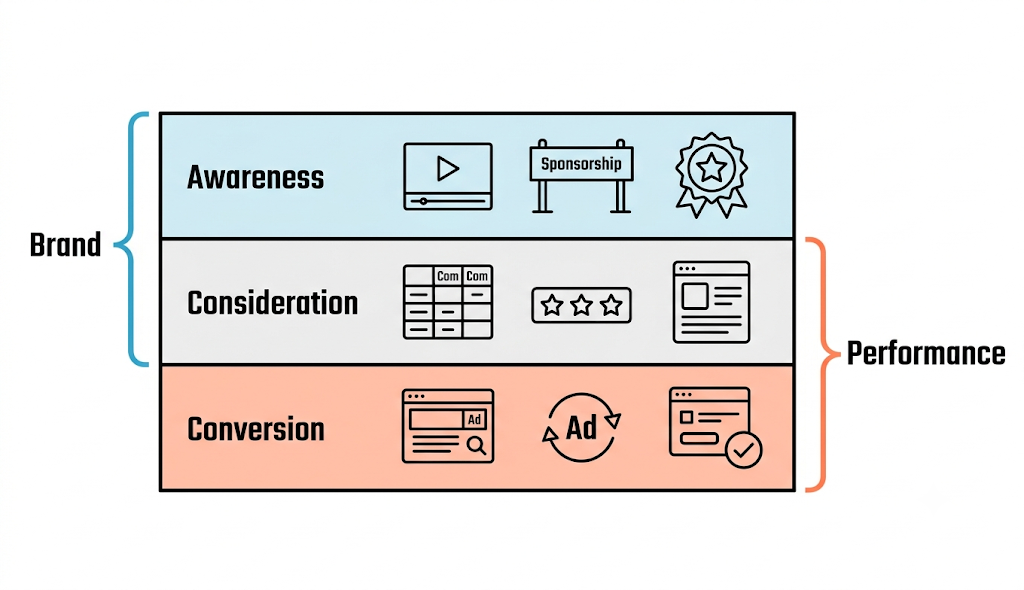
Brand marketing creates demand, while performance marketing captures demand. Most companies need both because customers rarely move from awareness to purchase in a single step.
This relationship is often described using a funnel:
- Upper funnel — awareness
- Middle funnel — consideration
- Lower funnel — conversion
Brand marketing is more common at the top of the funnel, where the goal is to build familiarity. Performance marketing is more common at the bottom, where the goal is measurable action.
Brand awareness can improve performance campaigns because people are more likely to click ads from companies they recognize. Research shows that recognized brands see lower CPAs because familiarity reduces friction at the point of conversion. Performance data can also help identify which audiences respond best, which can guide future brand campaigns.
In modern marketing, this relationship is harder to measure because users move across devices, platforms, and channels before converting. Because of this, many companies now use Marketing Mix Modeling (MMM), CRM data, and search trends instead of relying only on ad platform reports.
Why Brand Marketing Matters More in the Privacy Era
Marketing used to rely heavily on cookies and retargeting, but this is changing. Privacy rules including GDPR and CCPA, Apple’s App Tracking Transparency (ATT), and the winding down of Google’s Privacy Sandbox cookie replacement, reduce the amount of data available for performance targeting. 71% of brands have already reduced reliance on user-level data (eMarketer, 2025).
In the past, companies could rely on retargeting ads to stay visible. In 2026, that approach is less reliable. Some advertisers report attribution signal losses of up to 30–40% due to these privacy changes. Customers may not see the same ad again, which means the brand must already be familiar before the search begins.
Because of this, many marketers now say that performance marketing becomes more expensive when brand marketing is weak.
“In the Cookie Era, you could buy your way to growth with a mediocre brand and great targeting. In the Privacy Era, your brand is your targeting. If people don’t know who you are, the ‘Privacy Tax’ — the increased cost of reaching anonymous users — will eventually erode your margins.”
A common view in modern marketing strategy: In 2026, performance marketing is the cost of not having built a strong enough brand.
When customers already know the brand, performance campaigns usually convert faster and at lower cost. Building brand equity is now a direct lever for reducing CPA and improving ROAS over time.
What Happens When the Balance Is Wrong
Growth problems often appear when a company depends too heavily on only one type of marketing. Brand and performance have different roles, so using one without the other usually creates instability.
When a company relies mostly on performance marketing, results may look strong at first because campaigns target people who are already interested. Over time, the same audience is shown ads repeatedly, which increases cost and reduces response.
This is known as ad fatigue—when audiences see the same creative so often that engagement drops and costs rise. Research shows that 61% of consumers are less likely to buy from brands that repeat the same ads too frequently, and a study found that participants exposed to high-frequency ads experienced a 30% decline in engagement compared to those who saw ads less often.
Common signs of too much performance marketing:
- Rising cost per acquisition
- Audience fatigue and declining CTR
- Slower growth despite increasing spend
- Heavy dependence on paid traffic
Without brand marketing, performance campaigns can only capture existing demand. When that demand is exhausted, growth slows even if ad spend increases. Meta CPMs rose 20% year-over-year in 2026, partly driven by creative fatigue and more advertisers competing for the same audience.
Too much focus on brand marketing can create the opposite problem. Awareness may increase, but revenue may grow slowly if there is no clear path to conversion. Campaigns that focus only on visibility can make it difficult to evaluate results, especially when budgets are limited.
Common signs of too much brand marketing:
- Strong awareness but weak conversions
- Slow revenue growth
- Long feedback cycles
- Difficulty measuring impact
In practice, imbalance often appears when companies expect performance marketing to create demand that brand marketing was supposed to build.
Why the Right Balance Is Different for Every Company
There is no fixed formula for deciding how much brand marketing or performance marketing to use. The correct balance depends on business model, growth stage, and market conditions.
Important factors include:
- Company size
- Growth stage
- Available budget
- Competition level
- Sales cycle length
- Product price
- Market maturity
Companies with long sales cycles or expensive products usually depend more on brand because customers need trust before buying. In newer markets, brand marketing may be required to explain the category itself, while in mature markets, performance marketing may work more efficiently.
Measurement also affects the balance. Because cookies and user-level tracking are less reliable, companies increasingly use broader methods such as Marketing Mix Modeling (MMM) or Share of Search to understand brand impact. 71% of brands have already reduced reliance on user-level data (eMarketer, 2025), making aggregated measurement methods more critical for estimating long-term brand effects.
Because conditions change, the balance also changes. A strategy that works during early growth may not work later, which is why copying another company’s mix often fails.
Common Misunderstandings About Brand vs Performance Marketing
Many discussions about brand and performance marketing are based on simplified ideas that do not match how modern marketing works.
Misunderstanding 1: Brand Marketing Cannot Be Measured
Brand impact can be evaluated using search trends, awareness studies, Share of Search, and Marketing Mix Modeling (MMM), even when conversions cannot be tracked directly. MMM uses statistical analysis of aggregated data to understand how marketing activities—including brand campaigns—drive business outcomes like revenue and customer acquisition.
Misunderstanding 2: Performance Marketing Always Scales
Performance campaigns often become more expensive over time because the same audience is targeted repeatedly. Ad fatigue sets in when audiences reach an optimal exposure frequency of 7–10 impressions, after which engagement drops and platform algorithms penalize stale creative with higher delivery costs. Privacy changes also reduce tracking accuracy, which makes optimization harder without strong brand recognition.
Misunderstanding 3: Companies Must Choose One Approach
Most successful companies use performance marketing to capture demand and brand marketing to create future demand. The two approaches are complementary, not competing.
Misunderstanding 4: Technical Setup Is Only a Performance Issue
In the privacy-first environment, performance marketing also depends more on technical setup than before. Tools such as Conversion API (CAPI), server-side tracking, and CRM attribution are now needed to measure results when browser cookies are limited. Without these systems, performance data may appear weaker even if the campaign is working.
Because of these changes, brand marketing is often more important today than in the past. When tracking is imperfect, customers are more likely to choose brands they already recognize instead of clicking unfamiliar ads.
Final Thoughts
Brand marketing and performance marketing are not competing strategies. One builds familiarity over time, and the other turns that familiarity into measurable results. As tracking becomes less precise and competition increases, companies that depend only on performance often see costs rise while growth slows.
The companies that scale most consistently usually treat brand and performance as parts of the same system. Brand makes performance cheaper—a 15% increase in brand awareness can result in a 7% decrease in CPA—and performance makes brand measurable. When both are used together, marketing can support both short-term revenue and long-term growth without depending on one channel alone.
FAQs
Why is brand marketing more important now?
Privacy limits and tracking changes make targeting less reliable, so recognition matters more before a customer even begins searching.
Can performance marketing work without brand marketing?
It can work short-term, but ad fatigue and rising acquisition costs often increase without brand support.
How can brand marketing be measured?
Using awareness data, Share of Search, surveys, Marketing Mix Modeling (MMM), and Zero-Party Data (voluntary user preferences).
Why does performance marketing get expensive?
Competition increases, and the same audience is targeted repeatedly until fatigue sets in. Meta CPMs rose 20% year-over-year in 2026, with creative fatigue and auction competition as primary drivers.
Do small companies need brand marketing?
Yes. Even small brands benefit from recognition and trust. 68% of B2B buyers are more likely to buy from a brand they recognize, and brand familiarity directly reduces CPA over time.
Related Content
Read These Next
A/B Testing for Conversion Rate Optimization: How to Run Experiments That Increase Your Revenue