Search Engine Optimization vs Pay Per Click: The Honest Truth About Building Traffic




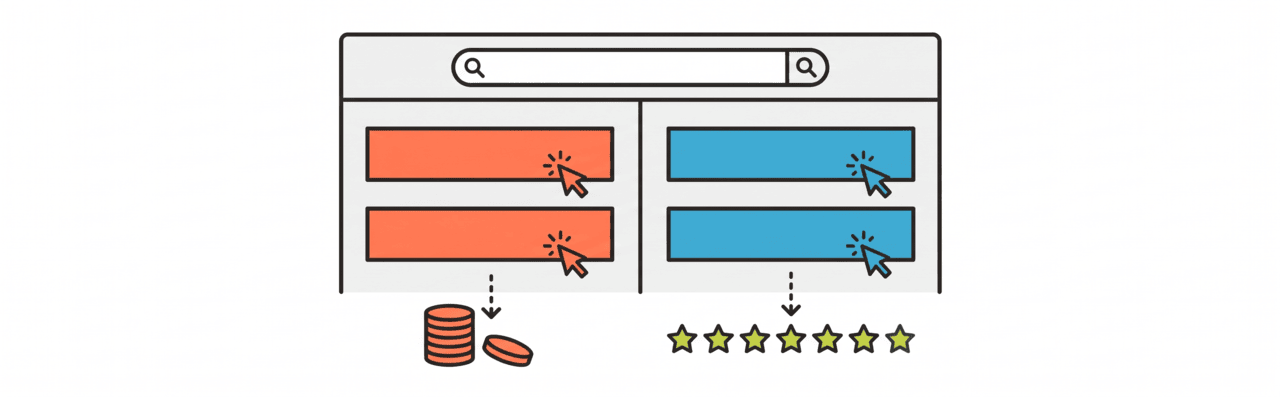
PPC and SEO are two ways to get traffic from search engines, but they work very differently.
- PPC (Pay-Per-Click) means you pay for each click. It helps you get traffic and sales fast.
- SEO (Search Engine Optimization) means you earn traffic over time by building trust and authority.
In 2026, search is no longer just about clicks. People now use voice search, visual search, and AI-powered answers.
Search engines can now give answers directly, sometimes without users clicking a link (called zero-click search). This means your content must be clear and easy for AI models to understand.
Key Takeaways
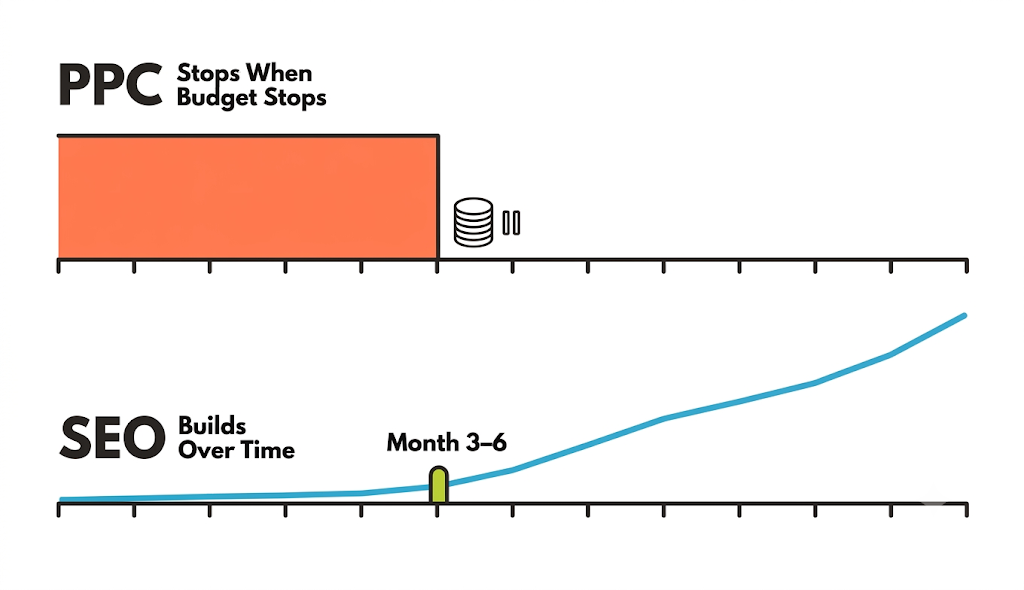
- PPC gives fast results, while SEO builds long-term growth
- Using both together increases trust and total visibility
- AI now controls both search rankings and ad bidding
- Website speed and clarity impact both SEO and PPC
- Real customer content improves engagement
- A new SEO KPI is mention frequency (how often your brand appears in AI answers)
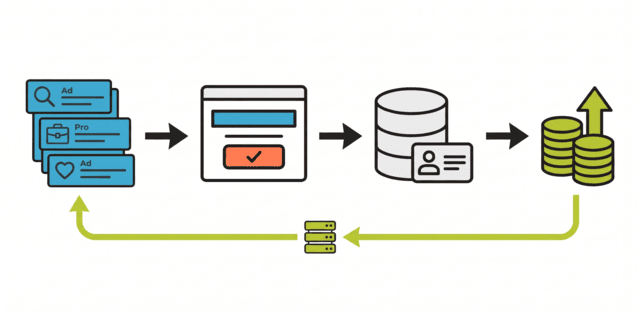
- PPC offers fast feedback on which messages work.
- Combining data allows brands to see how paid and organic listings interact on the same page.
- PPC acts as a fast-feedback loop; winning ad copy can be used to optimize organic website content and meta tags.
- The goal is incrementality (the extra results ads generate beyond what organic traffic would have captured on its own), ensuring ads generate new results.
SEO vs. PPC Full Strategy Comparison
In 2026, the primary difference between SEO and PPC is the delivery mechanism: PPC provides immediate, controlled visibility through paid auctions, while SEO builds long-term authority and mention frequency within AI-generated answers. A balanced strategy uses PPC for rapid testing and high-intent conversion, while SEO scales through content that fuels LLM citations and organic search rankings.
Key Differences and Applications
How to Choose Between SEO and PPC in 2026?
The best choice depends on your goals, timeline, and how your customers search.
1. Prioritize PPC for Rapid Scaling
Use PPC when you need fast results.
- Ideal for short-term goals (under 30 days)
- Helps control who sees your message
- Great for new products or limited-time offers
Case Study: Real estate agency HutnHomes suffered from high costs due to broad targeting. They adapted by restructuring their campaigns to separate audiences strictly by intent (buyers versus investors) and deployed AI smart bidding. This allowed them to lower their cost per lead from $150 to $70 and increase monthly leads.
2. Invest in SEO for Long-Term Authority
Use SEO when you want steady, long-term growth.
- Works well for blogs and guides
- Targets long-tail keywords
- Builds trust over time
Case Study: Visit Atlantic City 2025 previously managed multiple scattered tourism websites. By consolidating their domains under one primary URL, they centralized their SEO authority, leading to a 661% year-over-year increase in organic traffic.
3. Improve Your Website to Protect Your Profits
Neither SEO nor PPC works well if your website is hard to use.
- Pages must be clear and easy to navigate
- Faster sites improve both rankings and ad performance
AI systems also prefer simple, clean pages because they reduce tokenization cost (the cost of processing content).
Case Study: London Family Law Firm faced rising local search costs and poor lead quality. They deployed a multi-channel strategy but focused heavily on removing barriers on their landing pages, cutting acquisition costs by 60% and increasing monthly inquiries.
Why SEO and PPC Can No Longer Exist Apart
Traditionally, SEO and PPC have been treated like two different businesses. One team focuses on free long-term rankings, while the other manages paid daily auctions. In the past, this worked because the search results page (SERP) was clearly divided.
However, in 2026, several factors have made this siloed approach dangerous to your ROI:
- SERP Encroachment: AI Overviews (SGE) now take up the top 50% of the screen. If you are paying for an ad and appearing in the AI summary for the same query, you might be paying for a click you already won.
- Data Blind Spots: If your SEO team discovers a high-converting keyword, but doesn't tell the PPC team, you miss out on immediate revenue.
- The Attribution Trap: A user might click an SEO blog post, leave, and then return via a PPC ad. If you don't look at the Total Search journey, you’ll over-credit the ad and under-value your content.
To stop wasting budget and start capturing more market share, we have to move toward a Total Search Strategy.
What Is a Total Search Strategy?
A total search strategy combines SEO and PPC to improve overall search performance. Instead of managing organic and paid search separately, businesses share data across both channels to identify opportunities, improve targeting, and measure their combined impact on traffic and revenue.
This approach matters because users may interact with both organic listings and paid ads before making a decision. For example, someone might discover a brand through an SEO article and later return through a PPC ad. Measuring only the final ad click can undervalue SEO's contribution to the conversion.
A unified strategy helps businesses make better decisions in three key areas:
- Use PPC to Inform SEO: Test keywords and ad copy to identify which messages generate clicks and conversions. Use these insights to guide organic content and landing page improvements.
- Reconnect with Organic Visitors: Use PPC remarketing to reach people who visited through organic search but left without converting. Tailor ads to their previous interactions and needs.
- Measure Combined Performance: Analyze paid and organic results together to understand how the channels contribute to traffic, conversions, and revenue. Test whether ads generate additional results or capture clicks that organic listings might have earned without paid support.
By sharing data and measuring total performance, businesses can identify gaps, reduce inefficient spending, and decide where each channel adds the most value.
How to Integrate Your SEO and PPC Search Strategy
Using data from both channels allows for better content and more efficient bidding. PPC shows what works quickly, while SEO shows long-term trends. Together, they help build stronger marketing decisions.
1. Analyze Query Data Across SEO and PPC Channels
To understand search performance, combine query data (search terms users type into a search engine, along with metrics like impressions, clicks, and positions) with paid revenue data. Combining these numbers reveals the true value of every search term.
Platforms such as Google Ads Data Hub and the Microsoft Advertising Network can help connect and analyze these datasets at scale, especially when evaluating overlap between paid and organic performance.
2. Test Ad Copy to Inform Content
Use PPC to test headlines and messaging. This testing identifies which messages lead users to click and convert, then apply the best-performing ideas to blog posts, landing pages, and meta descriptions.
3. Find Exploratory Search Queries
AI-driven tools, including OpenAI Search, can uncover early-stage searches like “how to buy a home” instead of just “mortgage rates.” These are great for new organic content ideas.
4. Monitor for Keyword Cannibalization
Monitor for keyword cannibalization, which occurs when multiple listings compete for the same keyword and reduce overall efficiency. In this context, it often means paid ads take clicks that organic results would have captured for free.
Indicators include:
- Organic click-through rates drop while rankings remain stable
- Ad spend increases without growth in total revenue
5. Test Marketing Activity to KPIs
Pause ads to determine if a top organic keyword can capture clicks without an ad. If traffic remains stable, reduce spend and reallocate those funds to keywords where your organic visibility is weak.
Pro Tip: Run controlled ad pause tests regularly to measure Incremental Lift. This refers to the additional conversions generated by ads beyond what organic traffic would have delivered. Focus on total performance, not just paid metrics, to understand whether ads are creating new demand.
The Impact of AI on SEO and PPC
In 2026, search marketing focuses on high-quality content, reliable data, and clear website structure, not just keyword lists.
- AI Overviews and Zero-Click Searches: Search engines can answer questions directly, reducing clicks to websites. Clear headings, concise answers, and relevant structured data can help AI systems understand content, although inclusion is not guaranteed. Marketers use schema (e.g., unique information, overviews, consolidated lists) to make sure the AI uses their information as the source.
- Tracking Brand Mentions: Mention frequency measures how often a brand appears in AI-generated answers. AI visibility tools can track mentions and citations alongside traditional SEO metrics.
- Automated Ad Bidding: PPC platforms use AI to optimize bids and targeting. Accurate conversion data helps these systems make better decisions.
- Rising Ad Costs: As advertising costs change, businesses should monitor conversions and revenue to determine whether campaigns deliver value.
- Privacy and Data Collection: Recent laws (such as Comprehensive State Laws in the US or EU AI & Data Acts) make it harder to track users. Marketers resort to zero-party data collection (information customers voluntarily share with a brand, such as their preferences, interests, or purchase intentions), acquiring user information through utility tools and lead generation, with appropriate consent.
- Controlling AI Content Use: Google-Extended lets publishers control whether their content is used for certain Google AI training and grounding purposes. This does not guarantee visibility or exclusion from Google Search.
Adapting to AI Search
To stay competitive, businesses should:
- Target specific, research-based questions instead of relying only on short keywords.
- Use high-quality data to help AI algorithms make better decisions.
- Focus on authentic, human-generated content, which often works better than AI-generated ads.
- Publish useful, original content with clear structure.
- Prepare for AI agents that can make purchases directly for consumers.
Pro Tip: Answer questions directly using clear headings and concise paragraphs. This makes content easier to understand and may improve its chances of being referenced in AI-generated answers and improve visibility in zero-click results.
Future Outlook for PPC and How to Adapt
PPC is becoming more automated and data-driven, highlighting the need for maintaining website quality and data organization.
- The Need for Human Oversight
Automated systems can sometimes generate off-brand content or bid on irrelevant terms.
Brands must maintain a layer of human review to ensure that AI-driven PPC and SEO efforts align with business values.
- Authenticity is a Competitive Advantage
As the internet becomes flooded with AI-generated content, users are looking for “proof of human.”
Brands that use real customer testimonials or user-generated content (UGC) see higher engagement rates than those using generic assets.
- Optimize for Speed and Technical Health
Search engines reward websites that load in <2 seconds.
Improving your site speed can lower your PPC costs and improve your organic rankings simultaneously.
- Measurement of Incrementality
Brands must constantly test if their PPC ads are actually bringing in new customers.
If an ad only captures a click that would have been free via organic search, it is a waste of budget.
- Adopt a Migration Threshold
Once a keyword ranks in the top three organic positions for SEO, consider lowering your PPC bid for that specific term. This allows you to move your budget to test new keywords that you do not yet rank for.
How to Decide between SEO and PPC
Shifting focus from paid ads to organic search works best when an organic listing can capture the same traffic without losing revenue.
Strategic Decision Matrix: SEO vs. PPC Transition
Important Note on market data: Some studies suggest ads can replace a large portion of organic traffic. However, results vary widely by brand, industry, and keyword type. Always validate this with your own testing rather than relying on general benchmarks.
Final Thoughts
To implement a total search strategy, businesses should adopt a unified, data-driven model.
Start with these steps:
- Check for cannibalization where ads add no extra value
- Connect SEO and PPC data to identify high-performing gaps
- Use successful ad copy to improve existing content
- Clean up data signals to support automation and AI readiness
This includes integrating CRM data, enabling server-side tracking, removing duplicate conversions, and ensuring consistent measurement across platforms.
Frequently Asked Questions (FAQs)
How does PPC data help organic SEO?
PPC provides immediate feedback on what headlines and messages actually convert. Marketers can then take those top-performing messages and apply them to organic content to improve long-term performance.
When should a brand stop paying for an ad if they rank well organically?
A transition to SEO is ideal when a #1 organic ranking can capture the same traffic and revenue as the ad. However, ads should be maintained to protect brand names from competitors or to launch products with low awareness.
How long does it take to see results from SEO versus PPC?
PPC allows a brand to appear at the top of search results immediately. Conversely, SEO is a slower process, often requiring at least six months of consistent investment to show a significant impact on rankings and traffic.
Do I need to keep paying for ads if I rank #1 organically?
Not necessarily. Marketers are encouraged to adopt a migration threshold. Once a keyword ranks in the top three organic spots, a brand might lower its PPC bid for that term and reallocate that budget to test new keywords.
Related Content
Read These Next
A/B Testing for Conversion Rate Optimization: How to Run Experiments That Increase Your Revenue