B2B Marketing Attribution: A Complete Guide for Modern B2B Teams




B2B marketing attribution is the framework used to assign revenue value to specific touchpoints across a multi-month sales cycle. Unlike B2C, it tracks interactions from multiple stakeholders within an account—using models like W-shaped or Linear—to connect marketing spend in platforms like LinkedIn or Google Ads directly to CRM pipeline (e.g., Salesforce, HubSpot).
B2B attribution isn’t just about tracking clicks—it’s about understanding what actually drives revenue across a long, multi-touch journey.
Introduction
In B2B, the path to a deal is rarely linear.
A buyer might discover your brand through a LinkedIn ad, read a blog post weeks later, attend a webinar, and then finally convert after multiple sales calls. If you rely on last-click data, you miss most of that journey.
That’s why attribution matters more now than ever—especially in a privacy-first environment where tracking is fragmented, and platforms don’t share data. In 2026, attribution is no longer just a tracking problem—it’s a visibility problem. A large portion of B2B influence now happens in places that traditional tracking cannot capture, including dark social channels, private communities, and internal discussions within buying teams. Combined with the decline of third-party cookies, this makes attribution less about perfect tracking and more about reconstructing the full decision journey.
What Is B2B Marketing Attribution?
B2B marketing attribution is the process of tracking how different marketing touchpoints contribute to pipeline and revenue—not just leads.
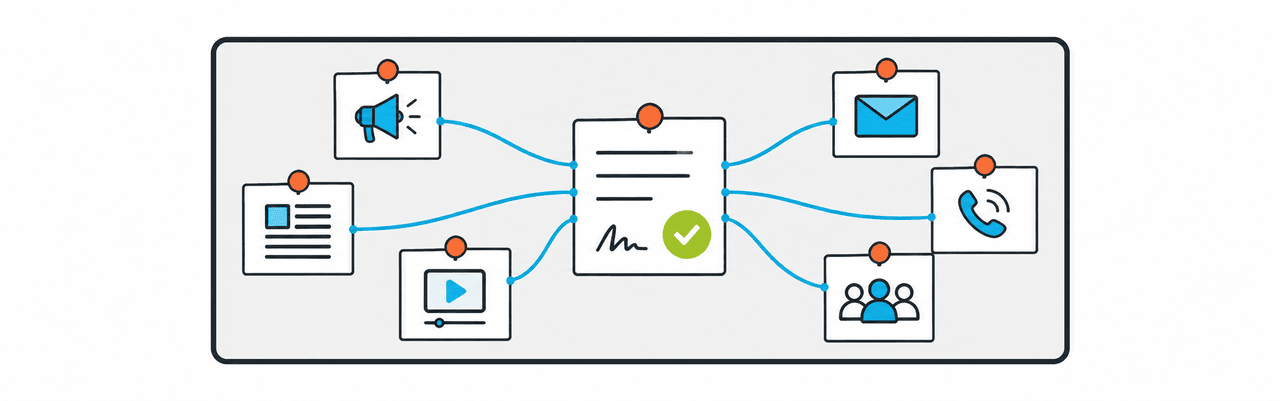
Unlike B2C, where conversions can happen quickly, B2B attribution focuses on longer sales cycles and multiple decision-makers. In most B2B environments, this is not a single user journey but an account-level journey. A typical deal involves a Buying Committee, where different stakeholders engage with different touchpoints across time. This is why attribution is often aligned with account-based marketing (ABM), where multiple interactions from the same company are aggregated to understand influence at the account level.
It connects:
- marketing activity (ads, content, campaigns)
- engagement (site visits, webinars, downloads)
- sales outcomes (opportunities, deals, revenue)
The goal isn’t just to see what generated a lead—but what actually influenced a deal.
How B2B Marketing Attribution Works
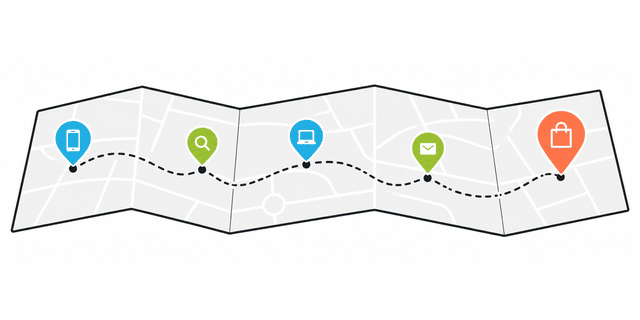
At a high level, attribution maps the full journey from first interaction to closed deal.
Typical flow:
- First touch → initial awareness (e.g., LinkedIn ad)
- Engagement → content interaction (blog, webinar, email)
- Lead → form submission or signup
- Opportunity → sales-qualified pipeline
- Closed deal → revenue
This requires connecting multiple data sources:
- CRM (HubSpot, Salesforce)
- Website tracking (analytics tools)
- Ad platforms (LinkedIn, Google)
Example attribution journey
A typical B2B path might look like this:
- A prospect clicks a LinkedIn ad
- Reads a blog post
- Registers for a webinar
- Talks to sales
- Converts into a deal
Without attribution, you’d likely credit the last step. With attribution, you see how each touchpoint contributed.
Why Attribution Breaks in B2B
B2B attribution fails not because of tools, but because of how decisions actually happen.
- Multiple stakeholders engage independently across channels
- Influence happens in untracked environments (Slack, email forwards, offline conversations)
- Decision-making is delayed and distributed across time
This creates a gap between what is measurable and what actually drives revenue.
As a result, attribution in B2B is less about tracking every interaction and more about approximating influence using both tracked and modeled data.
Attribution Across the Funnel
Common B2B Attribution Models
Different models assign credit differently. The right one depends on your sales cycle and goals.
First-touch attribution
- Gives 100% credit to the first interaction
- Useful for understanding what drives awareness
- Limitation: ignores everything after
Last-touch attribution
- Credits the final interaction before conversion
- Easy to track and widely used
- Limitation: overvalues bottom-of-funnel
Linear attribution
- Distributes credit evenly across all touchpoints
- Good for visibility across the journey
- Limitation: treats all touchpoints equally (even if they’re not)
Time-decay attribution
- Gives more weight to recent interactions
- Useful for shorter sales cycles
- Limitation: can undervalue early-stage efforts
W-shaped / U-shaped attribution
- Prioritizes key stages (first touch, lead creation, opportunity)
- More aligned with B2B funnel structure
- Limitation: still simplifies complex journeys
No model is perfect. Most teams use a combination or adjust models based on their data.
Tools Used for B2B Marketing Attribution
At a high level, the difference comes down to where your source of truth lives. Tools like HockeyStack and Dreamdata are built to connect marketing directly to revenue, while HubSpot and Salesforce rely more on CRM-based attribution. If you're running across multiple channels, something like Rockerbox helps fill the gaps between platforms but it comes with added complexity.
Choosing the Right Attribution Setup
The right setup depends less on features and more on your stage, data maturity, and sales complexity.
Here’s a practical way to approach it:
- If early-stage (<50 leads/month, no CRM)
→ Use GA4 + basic tracking + platform data
→ Fast to set up, but limited visibility into pipeline - If mid-stage B2B (CRM in place, tracking leads + deals)
→ Use HubSpot Attribution or Dreamdata
→ Better connection between marketing and pipeline - If scaling SaaS (multi-channel, longer sales cycles)
→ Use HockeyStack or Dreamdata + CRM
→ Needed to track full journey across touchpoints - If enterprise (multi-channel + large sales team)
→ Use Salesforce + Rockerbox + analytics stack
→ Required to unify fragmented data across channels
Trade-offs to consider:
- More accuracy = higher cost and setup time
- Simpler tools = faster insights, but less depth
- CRM-first setups = better revenue tracking, but require clean data
Attribution improves as your data improves. There’s no shortcut around that.
Measurement & Attribution Layer
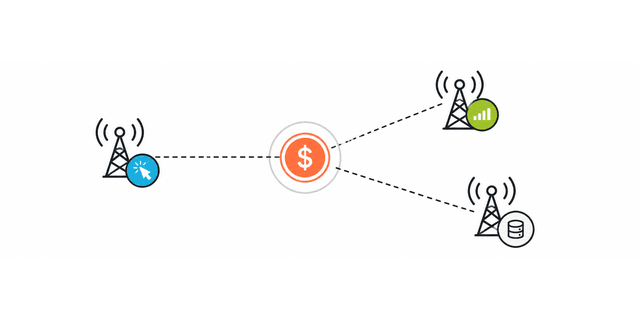
In B2B, your CRM is the source of truth.
Everything else: ads, analytics, attribution tool feeds into it.
Attribution tools don’t replace your CRM. They sit on top of it and help interpret how marketing influences pipeline and revenue.
A typical setup looks like this:
- CRM (HubSpot / Salesforce) → stores deals, pipeline, revenue
- Attribution tools (HockeyStack / Dreamdata) → map touchpoints to outcomes
- Ad platforms (LinkedIn, Google) → provide campaign-level data
In more advanced setups, a Customer Data Platform (CDP) may sit between these systems to unify first-party data across sources.
In more advanced architectures, attribution systems are designed as a data layer rather than a standalone tool. This often includes integrating CRM, attribution platforms, and CDPs into a centralized warehouse (e.g., Snowflake or BigQuery) to improve data consistency and modeling accuracy.
This layered approach matters because no single platform sees the full picture.
First-party tracking refers to collecting and using data directly from your owned channels—such as your website, CRM, and product analytics—rather than relying on third-party cookies. This has become essential due to privacy regulations like GDPR and CCPA, which limit cross-site tracking and data sharing between platforms.
Unlike third-party tracking, first-party data is:
- more reliable
- compliant with privacy regulations
- directly tied to actual business outcomes (pipeline, revenue)
Also important: attribution is not fully accurate.
Because of:
- privacy restrictions
- cross-device behavior
- offline interactions (calls, meetings)
Most tools rely on a mix of:
- tracked data (what can be measured)
- modeled data (what is estimated)
The goal isn’t perfect accuracy—it’s better direction.
Role of AI in B2B Attribution
AI is starting to change how attribution works—but not in the way most people expect.
Instead of replacing attribution models, AI is improving how data is interpreted:
- Predicting which channels are likely to influence the pipeline
- Identifying patterns across long sales cycles
- Filling gaps where tracking is incomplete
At the same time, platforms like LinkedIn and Google are becoming more automated—handling targeting, bidding, and optimization.
This creates a shift:
- Less manual control over campaigns
- More reliance on input data + signals
- Attribution becomes more about validation than tracking
In other words, attribution is moving from:
👉 “What happened?”
to
👉 “What should we do next?”
Challenges of B2B Attribution
Even with the right tools, B2B attribution comes with real limitations:
- Data fragmentation
Marketing, sales, and product data often live in different systems - Long feedback loops
Deals can take months, making optimization slower - Attribution bias
Different models show different results depending on how credit is assigned - Operational overhead
Tools require setup, maintenance, and ongoing data cleanup - Dark social and untracked interactions
A significant portion of B2B influence happens in private channels such as Slack groups, email threads, internal discussions, and word-of-mouth referrals—none of which are directly captured by attribution tools, creating inherent gaps in measurement.
These aren’t edge cases—they’re part of the process. The goal is to work with them, not eliminate them.
Expert Tip
Use "Triangulation" Over Single-Source Truth: High-performing B2B teams never rely on a single attribution model. Instead, they triangulate performance by comparing three distinct views:
- CRM Pipeline Attribution: To see which channels drive actual revenue.
- Platform-Reported Conversions: To see real-time ad performance (Meta/Google).
- Modeled Attribution: To fill in the gaps caused by privacy-related signal loss.
The goal isn't to make these numbers match perfectly—they won't. The goal is to identify consistent patterns across all three systems. If a campaign looks strong in the CRM and on the ad platform, it’s a high-confidence winner.
Conclusion
B2B marketing attribution isn’t about tracking everything perfectly.
It’s about building a system that helps you make better decisions.
In a landscape where journeys are long, data is fragmented, and platforms don’t tell the full story, attribution becomes less about precision—and more about clarity.
The teams that get this right don’t rely on one tool. They connect:
- CRM
- attribution tools
- analytics
and use that system to understand what actually drives revenue.
Because at the end of the day, attribution isn’t about clicks or leads—it’s about pipeline and growth.
FAQs
What is B2B marketing attribution?
B2B marketing attribution tracks how different marketing touchpoints contribute to pipeline and revenue across long sales cycles, helping teams understand what actually drives deals.
What is the best attribution model for B2B?
There’s no single best model. Many B2B teams use W-shaped or multi-touch attribution because they reflect key stages in the sales funnel, but models should be adapted based on your data and sales process.
What tools are used for B2B attribution?
Common tools include HockeyStack, Dreamdata, HubSpot, Salesforce, and Rockerbox. These tools connect marketing activity to pipeline and revenue using CRM and first-party data.
How do you measure ROI in B2B marketing?
ROI is measured by connecting marketing efforts to pipeline and closed revenue through CRM data and attribution tools, rather than relying only on leads or platform-reported conversions.
Read These Next
Marketing Attribution Tools: 15+ Platforms to Track ROI Accurately