.png)


Growth Hacking Examples: 9 Case Studies of Companies That Scaled to Millions
.png)

.png)

In 2026, growth hacking is the deployment of automated data pipelines (e.g., Snowflake, Salesforce API integrations) and algorithmic workflows to systematically eliminate conversion funnel bottlenecks. Instead of manual scaling, companies leverage programmatic viral loops, product localization automation, and event-driven scraping to achieve exponential user acquisition tied directly to specific revenue maturity stages.
Key Takeaways
- Scaling businesses must align their growth strategies directly with their specific maturity level, budget, and validation stage to maximize ROI.
- Top brands substitute slow manual spreadsheet pulls with integrated data engines and automated workflows to run multiple campaigns on autopilot.
- Mapping the exact breakdown in the conversion pipeline prevents teams from blindly chasing marketing fads that fail to solve core operational issues.
- Implementing double-sided referral incentives allows customer bases to multiply exponentially using digital server space instead of expensive ad spend.
- Teams must zero in on a single main performance metric per phase rather than spreading work thin across too many tactics.
How to Develop a Growth Framework in 2026
Scaling a business efficiently requires matching growth tactics directly to the company's maturity level, budget, and validation stage. Businesses maximize their return on investment by starting with zero-cost validation loops to prove product demand, building organic inbound systems over time, and reserving high-cost or high-touch channels for mature stages.
Choosing the Best Growth Strategies Based on Budget and Revenue
- Map the exact bottleneck in the conversion funnel before picking a tactic to prevent teams from blindly chasing trendy marketing fads that fail to solve the real operational breakdown in the sales pipeline.
- Validate product demand through quick landing pages or interviews before funding growth, because launching campaigns without verified market fit burns through capital like pouring water into a leaky bucket.
- Deploy low-cost options like viral referral loops and organic posts when budgets are tight to leverage time instead of money, building a compounding web of brand advocates without draining vital cash reserves.
- Prioritize growth hacks that can scale up ten times over without ten times the labor, since manual outreach eventually hits a hard execution ceiling, while automated loops allow infinite expansion without breaking down the team.
- Exhaust organic channels and prove unit economics before running paid ad campaigns to avoid burning massive amounts of money just to learn basic marketing lessons that organic channels could teach for free.
- Shift to hyper-personalized account targeting when chasing large corporate deals, as generic cold messages get immediately deleted by corporate decision-makers, while customized research cuts through noise to secure massive contracts.
- Zero in on just one main performance metric during each separate growth phase because spreading work thin across ten different marketing tactics at the same time guarantees zero meaningful progress and dilutes business impact.
Moving From Strategic Theory to Real-World Results
Strategic design templates provide a logical starting point, but long-term success comes down to real-world deployment. Moving from theoretical frameworks to practical application reveals the exact methods high-growth companies use to dismantle complex marketing barriers.
The following real-world case studies show how top brands put these step-by-step blueprints into action to fix user friction and build compounding revenue engines.
9 Real-World Growth Hacking Case Studies
Modern growth hacking scales business operations by replacing slow manual tasks with smart automation, optimized user workflows, and viral sharing loops. These case studies outline practical blueprints where companies unified separate data systems, automated personalized outreach, or fixed path design errors to capture millions of users, lower operation times, and maximize pipeline revenue.
Data Integration and Automation Success Models
Case Study 1: Recharge Automated Growth Workflows to Optimize Conversions
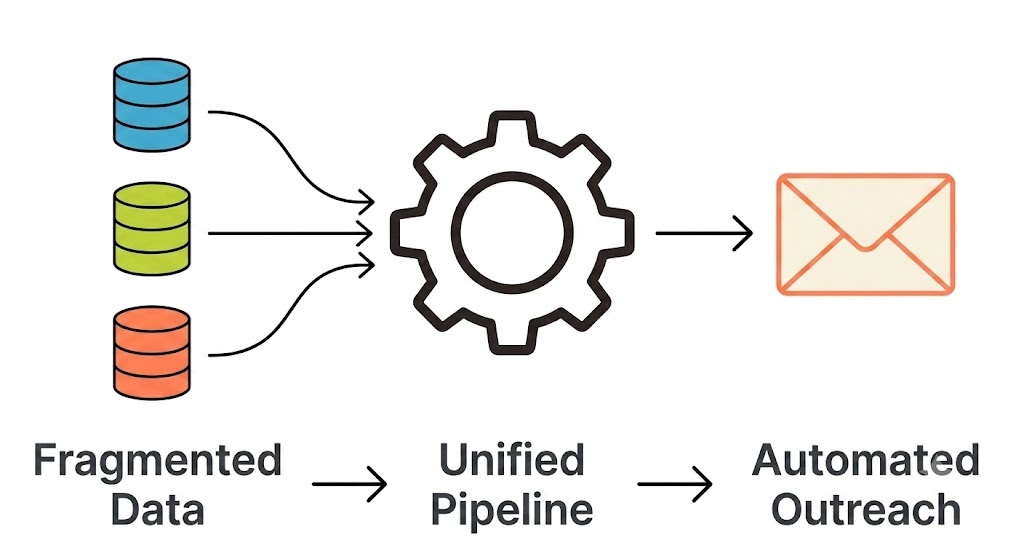
Recharge possessed a decade of customer and product data across separate databases like Snowflake and Salesforce, but the immense manual coordination required to pull these lists limited the team to launching only one campaign per quarter.
Pulling fragmented records by hand from Salesforce accounts, account profiles, and transaction records historically took the growth operations team weeks of manual data labor.
- Strategy
To eliminate the manual workflow block, operations must connect isolated behavior files directly into a single central automation table. By linking their behavioral systems together, Recharge built complex filters that automatically cross-referenced database files with active CRM data to immediately flag at-risk accounts showing drops in platform usage.
Artificial intelligence agents then evaluated individual account statistics to auto-generate personalized outbound emails that calculated the exact monthly revenue metrics prospects could retain using the platform.
- Results
This integrated data engine allowed Recharge to step away from slow spreadsheet pulls and run eight simultaneous growth plays on autopilot. The automated pipeline boosted opportunity conversion rates by 20% across campaigns and increased outbound meeting bookings by 12%.
Case Study 2: Rippling Scaled Cold Messaging Performance via Algorithmic Personalization
Rippling needed a way to scale up its outbound customer acquisition channels to meet record performance goals without hiring an army of workers to research targets by hand. Finding accurate lead listings and validating prospective buyer information manually created severe operational data blocks that restricted rapid growth experimentation.
- Strategy
Executing this process requires building an automated pipeline that drops new leads directly into enrichment tables, passes those details to centralized storage data blocks like Snowflake, and pushes structured variants into Outreach sales tools. This foundation enabled Rippling to deploy more than 12 targeted email copy variations mapped directly to distinct buyer personas and profiles.
- Results
For physical direct mail campaigns, the system automatically cross-referenced contact files with office directories to determine which building sat within a logical commuter distance. This multi-step data verification workflow eliminated manual address errors, helping Rippling double the year-over-year performance of its cold email channel with zero engineering maintenance hours.
Case Study 3: Noble Formed Automated Enrichment Chains for Digital Brand Placement
Noble helps corporate brands show up directly inside AI search engine results, but the company faced an operational wall because no universal data repository mapped websites to content decision-makers.
Without a clear data foundation to identify the correct contact at each digital publication, the system would collapse under huge amounts of manual research work.
- Strategy
Building a similar outreach engine requires utilizing an API structure that checks domain data hourly and deploys fallback software systems to fill missing info gaps across high-priority targets. The software at Noble reviews client keywords to find the exact pages that large language models mention online, then leverages AI research features to scan article text and write unique email introduction sentences.
- Results
Embedding custom analytical data points inside the first paragraph of each email allowed the automated agents to maintain a personal human touch while processing roughly 10,000 contacts monthly.
This automated enrichment chain secured an 80% to 90% data coverage rate and achieved a 10% conversion rate into formal publisher agreements.
Product Design and Conversion Path Improvements
Case Study 4: Materials Market Compressed Checkout Journeys to Address Cart Abandonment
Materials Market discovered a costly structural breakdown where one out of every four shoppers left the website during the final payment steps. Visual heatmaps and session playbacks on Hotjar revealed that mobile users could not see above-the-fold call-to-action buttons, while desktop users experienced severe cognitive load due to multi-page forms.
- Strategy
Replicating this conversion fix requires using visual session tracking to audit user steps, followed by stripping away forced registration walls that require multi-page details. Materials Market compressed the entire purchasing flow by collecting all customer details onto a single secure pop-up modal right inside the checkout journey. Additionally, simple text adjustments changed the button prompt from a confusing "Sign up" note to a clear "Secure Checkout" tag to put buyers at ease.
- Results
Simplifying layout paths and reducing required user steps directly optimized the conversion engine. These minor product tweaks boosted the overall site payment conversion rate from 0.5% to 1.6% in one month and decreased the checkout drop rate to just 4%.
Lead Generation and Profiling Automation
Case Study 5: Nytro Marketing Gathered Leads via Event-Driven Social Scrapers
Nytro Marketing wanted to expand its client engagement and lead generation pipelines beyond basic email lookups. The agency needed a versatile, scalable workflow to manage events and capture broad social selling prospects without consuming entire days of manual prospecting time.
- Strategy
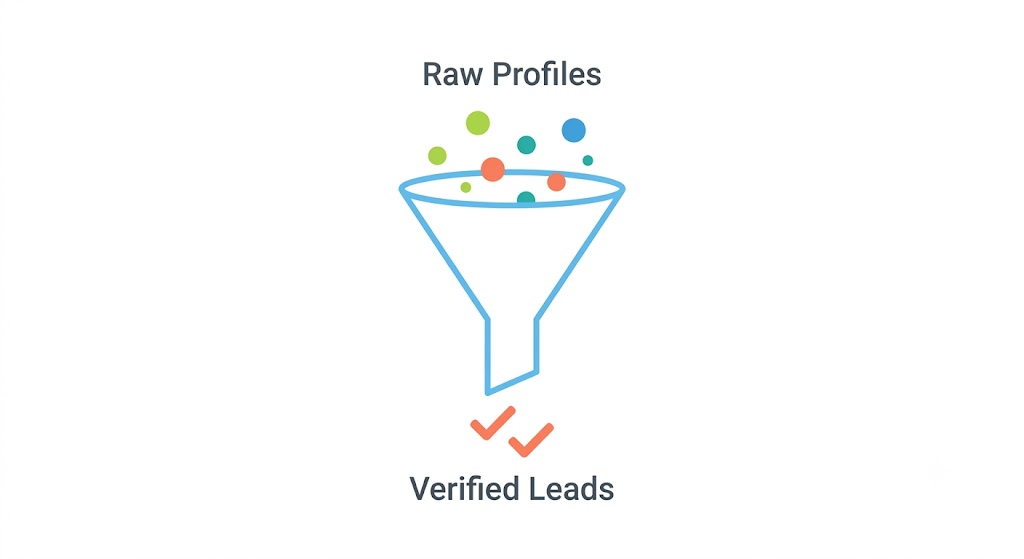
To set up an event-driven loop, companies can use a combination of web scrapers, native platform event exports, LinkedIn or community directory workflows, and API connectors to capture attendee or member data from online groups and digital event listings. In a more mature stack, these inputs can be routed through tools such as Zapier, Make.com, or Segment before being enriched, deduplicated, and passed into a CRM or outbound sequencer.
For instance, the system at Nytro Marketing automatically categorized gathered leads by connection level: close first-degree contacts were sent personalized follow-up notes containing webinar links, while distant targets were passed to secondary verification software to locate valid corporate email endpoints.
This type of workflow can reduce manual prospecting, but it also requires guardrails around GDPR, CCPA, consent rules, platform terms of service, and API rate limits when collecting or enriching contact data.
- Results
Automating data tracking outside the primary user network allows outreach agents to operate continuously in the background. This scalable extraction model sourced 11,000 qualified leads for Nytro Marketing and saved each worker roughly one full day of labor every single week.
Case Study 6: Nothing2Install Optimized Domain Sourcing via Scraper Scripts
Nothing2Install wasted significant corporate hours using slow, fragmented in-house scraping tools that required heavy maintenance and provided inefficient data sourcing. The startup needed a highly structured method to identify correct profile links across complex mobile store listings.
- Strategy
Replicating this targeted prospecting plan involves pulling firm names from initial marketplace applications and filtering them through custom cross-referencing steps . Nothing2Install combined domain finders with data scraping crawlers to double-check URL accuracy and capture additional social profile data. The system then applies an internal scoring module to compare the combined outputs, ensuring that the correct business files match the intended target.
Take note that any scraper-based workflow should account for robots.txt restrictions, platform terms, GDPR/CCPA obligations, and the risk of inaccurate or outdated profile data entering the scoring model.
- Results
Automating the lead verification and tracking steps completely removed the data transfer bottleneck. This precise selection pipeline provided high-value prospects while eliminating 60 hours of manual data labor every single month.
Operational Scale and Content Translation Experiments
Case Study 7: Huel Empowered Internal Teams via Unified AI Infrastructure
Huel found that basic AI chatbots like ChatGPT kept useful work locked inside individual user accounts. There was no central platform to link artificial intelligence capabilities to the internal software networks and processes people relied on every day.
- Strategy
Transforming internal workflows requires launching a dedicated core automation team that sets up a unified low-code software infrastructure across the business. Huel embedded tech-savvy employee "champions" inside separate departments, training them to become super users who construct custom internal workflows for their respective teams.
- Results
The organization reinforced this momentum by hosting short training sessions and bi-weekly company showcases where workers demonstrated automated systems. Today, automated bots operate inside chat apps to read vendor invoices and resolve legal queries, a framework that has saved Huel close to 1,000 manual work hours and removed £100,000 in single-purpose software license fees within nine months.
Case Study 8: Life360 Deployed Automated Workflows for Bulk App Localization
Life360 faced severe operational blocks when launching in foreign regions because no single manager owned or controlled the translation process. The lack of design-driven automation tools and workflows forced teams to handle data through slow, manual methods.
- Strategy
To execute a rapid localization play, companies must link active design files, software code repositories, and messaging assets straight into an automated translation hub. Life360 populated its system with highly thorough glossaries and brand terminology style guides to ensure extreme data context accuracy. This allowed the machine learning loop to process 500,000 product strings and complex legal texts in bulk overnight.
- Results
Linguists are brought in only during the final phase for post-editing polish and nuance corrections, drastically shortening review times. This automated localization pipeline helped Life360 expand into five new regional markets in less than a month, saving two months of manual project labor and trimming total translation expenses by 80%.
Case Study 9: Dropbox Exchanged Digital Resources to Drive Viral Acquisition
Companies operating with tight budgets face high client acquisition blocks if they rely strictly on traditional paid marketing channels. To scale up without burning valuable capital, Dropbox engineered a viral loop that transforms the core software into its own primary marketing driver.
- Strategy
Replicating this classic growth loop requires offering digital features directly inside the account path in exchange for user invites. Dropbox built an automatic loop that awards free cloud storage quotas to an existing user when they invite a friend, while simultaneously handing out that same bonus space to the newly registered recipient once the profile activates.
- Results
Because the reward incentive costs the company nothing but digital server space, the customer base could multiply exponentially without any external ad spend. This simple double-sided storage incentive transformed baseline users into active acquisition promoters, expanding Dropbox's active user base by 3,900% over 15 months.
However, growth systems also carry risks. Referral programs can attract fraud and reward abuse, while scraping and enrichment workflows may create GDPR, CCPA, or platform-policy compliance issues.
API-driven pipelines can break due to endpoint changes or rate limits, and bulk email programs require strong deliverability, consent, suppression-list management, and SOC2-aligned data practices.
Summary Matrix of Real-World Case Studies
Data-Driven Selection Framework Across Business Scales
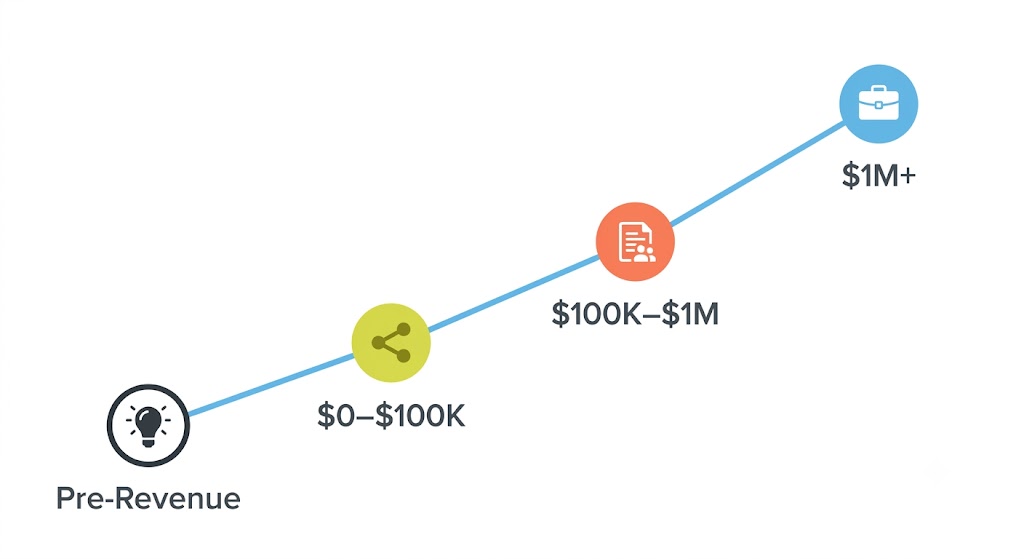
- Pre-Revenue Foundations
Focus exclusively on customer feedback interviews, basic landing pages, and user activation metrics to prove basic value before allocating capital.
- Early Operational Stage ($0 - $100K ARR)
Maximize zero-cost or cheap strategies like viral referral programs, organic posts, and friendly cold messaging to validate acquisition channels.
- Mid-Market Scale ($100K - $1M ARR)
Shift capital into sustainable inbound programs, such as organic content hubs, free digital tools, and customer community networks.
- Enterprise Phase ($1M+ ARR)
Layer on high-touch account-based marketing pipelines and optimized ad campaigns to target enterprise contracts with high lifetime values.
- Funnel Optimization Rule
Track conversion metrics, signups, and customer acquisition costs closely across every test, focusing on a single core metric to clear the primary pipeline bottleneck.
Future-Proofing Growth Hacking in the Age of AI-Driven Marketing
- Build Centralized Data Pipelines Instead of Using Separate AI Apps
Moving away from separate, copy-paste standalone tools and shifting toward unified data orchestration channels overcomes the shallow limits of isolated AI tools.
Advanced growth teams combine multi-provider databases, algorithmic lookups, and native sequencers into integrated background engines to run complex campaigns while maintaining a distinct human touch at scale.
- Train Machine Learning Tools with Detailed Glossaries and Style Guides
Companies must invest heavy time into preparing thorough, structured glossaries and localized style documentation before launching automated campaigns.
An automated machine learning loop is only as precise as the baseline framework data it utilizes to learn brand tone, context, and formal rules.
- Target the Underlying Sources and Databases That AI Models Cite
As internet search trends evolve, visibility engines must pivot toward auditing the specific underlying databases that large language models cite online.
Growth teams can build automated workflows that automatically cross-reference these domains and secure brand placements across target platforms.
- Shift Human Talent to High-Value Creative and Strategic Tasks
Resource budgets must change to support high-value strategic and creative tasks rather than repetitive operations. Positioning automated AI agents to manage bulk data processing, primary localizations, and initial data lookups frees up skilled human workers for final quality verification and campaign orchestration.
- Deploy Short-Form Video Assets to Clear Customer Funnel Friction
Marketing teams can utilize popular short-form video platforms to clear common consumer bottlenecks. Creating fast, educational clips that showcase a product solving real user problems drives highly targeted traffic and increases activation metrics.
Final Thoughts
To successfully transition from strategic theory to real-world exponential growth, businesses can implement these actionable steps:
- Map out the exact sales pipeline breakdown before picking a marketing tactic.
- Run quick landing pages or user interviews to confirm product fit before funding campaigns.
- Link isolated databases and behavioral files into centralized data pipelines to eliminate manual labor.
- Build double-sided viral loops into the product to transform existing clients into active promoters.
- Zero in on just one core performance metric during each separate growth phase to maximize impact.
- Build compliance, fraud detection, API rate-limit handling, and data governance into automated growth systems before scaling them across large audiences.
Frequently Asked Questions (FAQs)
How does growth hacking scale companies today?
It deploys automated data pipelines, programmatic APIs, and CRM integrations to clear funnel bottlenecks and unlock exponential growth without draining manual engineering resources.
What are the best strategies when operating on a tight budget?
Startups should prioritize low-cost options like viral referral loops and organic posts to leverage time instead of money, building an audience without wasting cash reserves.
Why must companies validate product demand first?
Launching marketing campaigns without verifying market fit burns through capital like pouring water into a leaky bucket.
Related Content
Read These Next

B2C Marketing Automation: 7 Retail Workflows That Drive Immediate Impulse Sales