Behavior-Led Growth Hacking in 2026: A Guide to Understanding Consumer Behavior




Behavior-led growth hacking is a marketing plan that studies how people shop across apps and physical stores. It focuses on omnichannel discovery—where social media, virtual try-ons, and mobile stores are accessed by customers. This data helps brands direct shoppers to purchase, building trust by keeping information accurate across platforms.
Key Takeaways
- Consumer behavior analysis must track customer journeys across digital and physical channels.
- Fast mobile experiences and seamless checkout help reduce cart abandonment.
- CDPs and predictive analytics enable personalized experiences and timely customer responses.
- Transparent information, authentic reviews, and sustainability help build consumer trust.
- Social commerce and hybrid shopping habits require consistent experiences across platforms.
- Competitive pricing, product quality, and clear brand value help retain customer loyalty.
Structural Changes in Consumer Behavior in 2026
Shoppers in 2026 seek value regardless of their income level. Brands now compete by offering a mix of price, quality, and trust. Value is no longer just the lowest price, but also comes from:
- Experience and Ease: Optimized checkout and omnichannel access drive value perception.
- Trust and Authenticity: Faces high scrutiny from consumers
- Sustainability: According to the Simon-Kucher 2024 Global Sustainability Report, 54% of consumers will pay more for sustainable goods.
A major challenge for brands is people switching to cheaper imitations (called “dupe” culture). The Salesforce 2026 Shoppers Report shows that 74% of consumers switched brands in the past year. Consumers have no problem switching brands if the value is proven to be higher by the competing company.
Loyalty Erosion and Dupe Culture
Brand loyalty has declined as it has become easier to find cheaper alternatives. Buyers frequently switch brands to find better value.
In the last year, 74% of consumers changed brands according to the Salesforce Connected Shoppers Report in 2026. Many intentionally seek dupes, which are lower-priced imitations of popular products.
Over 70% of American Gen Z shoppers frequently buy dupes that mimic name-brand fashion and beauty items in a Business Insider 2023 study. These shoppers prioritize the look and function of a product over the brand name on the label.
To fight this, brands must clearly communicate unique value and use robust customer review systems to provide necessary social proof.
How Consumers Search and Discover Products
Consumers no longer rely on a single channel to find and evaluate products. Discovery and research are now fragmented through multiple channels:
- Multi-Channel Mix: Modern consumers discover brands through a diverse mix of search engines, TV ads, word-of-mouth, and social media. According to GWI in 2025, no single channel dominates entirely, making a multi-platform strategy essential for brand visibility. By blending digital websites and retail platforms with traditional media, businesses can better capture fragmented audience attention across the entire shopping journey.
- Top Discovery Channels: According to Salsify’s 2026 Consumer Research, the top channels for discovering new products are physical retail stores (60%), online marketplaces like Amazon (57%), and social media platforms (52%). GWI reports in 2025 also indicate that search engines (32.8%) and TV ads (32.3%) are also massive drivers of initial brand awareness.
- Research Phase: When it comes time to research a product, Salsify reports in 2026 that 51% of shoppers head to online marketplaces. Regardless of whether a customer is buying everyday essentials, mid-range apparel, or big-ticket electronics, they typically consult two to three different channels before making a final decision.
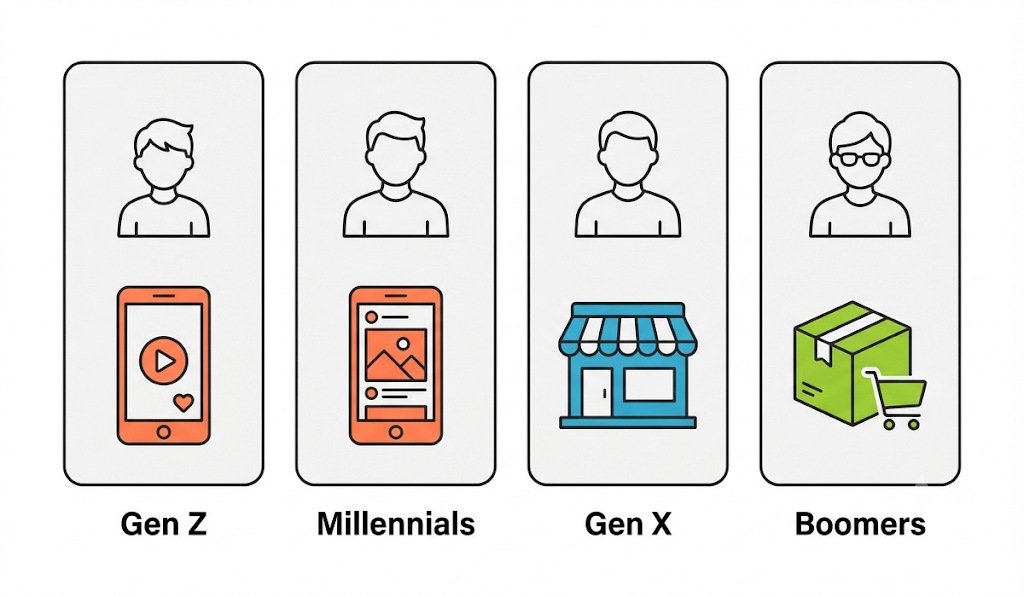
It is also important to consider how different age groups prefer to shop, as it influences how consumers find brands. Gen Z and Millennial shoppers prefer social media to discover products, often using those apps instead of search engines to start shopping.
Social media ads remain the number one source of brand awareness for internet users aged 16 to 34, as reported by GWI in 2026. Meanwhile, Gen X shoppers tend to find products in physical stores, while Baby Boomers often use online marketplaces. To build awareness, search engines work best for middle-aged groups, while television remains effective for the oldest generation.
The Rise of Social Commerce and Direct In-App Purchasing
Social media is now a primary storefront instead of just a social tool. This change is driven by headless commerce APIs—tools that separate the frontend of a store, which customers interact with, from the backend that manages data. This allows brands to place checkout options directly into any platform.
Research from Precedence predicts global social commerce sales are projected to surpass $1.6 trillion in 2026, accounting for 22.4% of all global ecommerce transactions.
- Shoppable videos like TikToks and Instagram Reels generate 3.7 times higher conversion rates than static ads, according to Wyzowl Video Marketing Statistics in 2026.
- Approximately 66% of global shoppers are interested in live-stream shopping events, according to DHL E-commerce Trend in 2025.
- Virtual try-on tools help reduce the number of customer item returns.
By merging discovery with instant checkout and virtual testing, brands are allowing shoppers to move from seeing an item to completing a purchase without ever leaving the app.
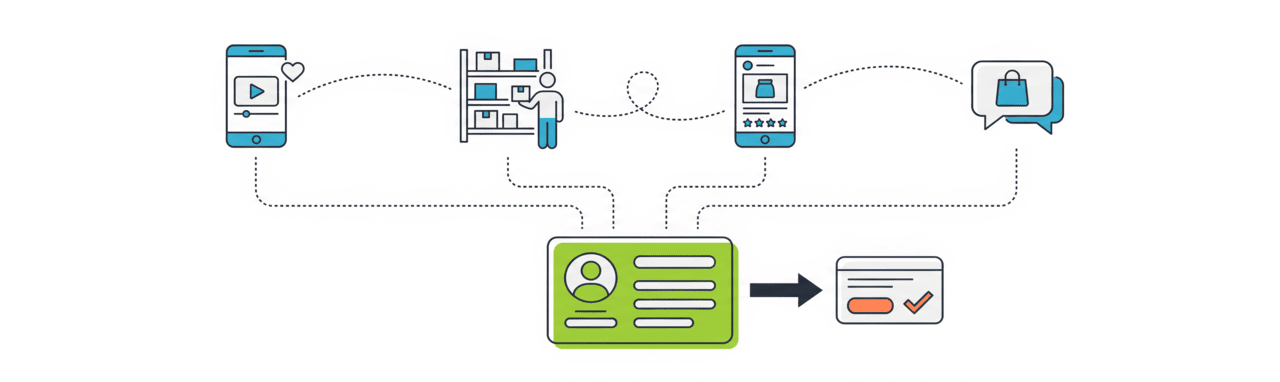
Pro Tip: To track intent, use an AI-driven Customer Data Platform (CDP). These platforms link a customer's in-store mobile usage to their social media browsing to predict their next move.
Hybrid Shopping Habits: The Phygital Experience
Shoppers in 2026 move easily between screens and store aisles. This phygital (physical and digital) behavior means customers use both environments at once.
- Webrooming: Customers constantly cross-reference digital and physical spaces. Shoppers participate in webrooming, where they research a product online before purchasing it in a physical store.
- Showrooming: Customers who engage in showrooming inspect a product in person before buying it online.
- In-Store Mobile Usage: Smartphones are a constant companion in the physical retail environment. The majority of global consumers visit a retailer's website from their phone while standing in a physical store, Statista reports in 2025.
- Social to Physical Conversions: Digital discovery heavily influences physical retail sales, with shoppers across markets reporting making an in-store purchase after initially discovering the item on social media.
- BOPIS (Buy Online, Pick Up In-Store): This hybrid fulfillment model has transitioned from a convenience to a necessity. In 2024, 97.2 million Americans regularly used BOPIS, and the global BOPIS market is projected to reach $440.39 billion by 2032, according to the US BOPIS report in 2025.
Despite the convenience of digital channels, physical stores remain vital. Shoppers continue to purchase new products in physical retail stores to finalize a purchase. This means brands must ensure that their product information, pricing, and messaging are perfectly consistent across all platforms.
Growth Hacking: From Linear Funnels to Non-Linear Journeys
The traditional marketing funnel has been replaced by a cycle of touchpoints across different platforms. Shoppers no longer follow a straight path from an ad to a purchase. Instead, they research products on phones while standing in physical stores. Because of this habit, discovery happens on voice, visual, and social platforms at the same time. For example, a customer might see a product on TikTok, visit a store to touch it, and then buy it through a chatbot.
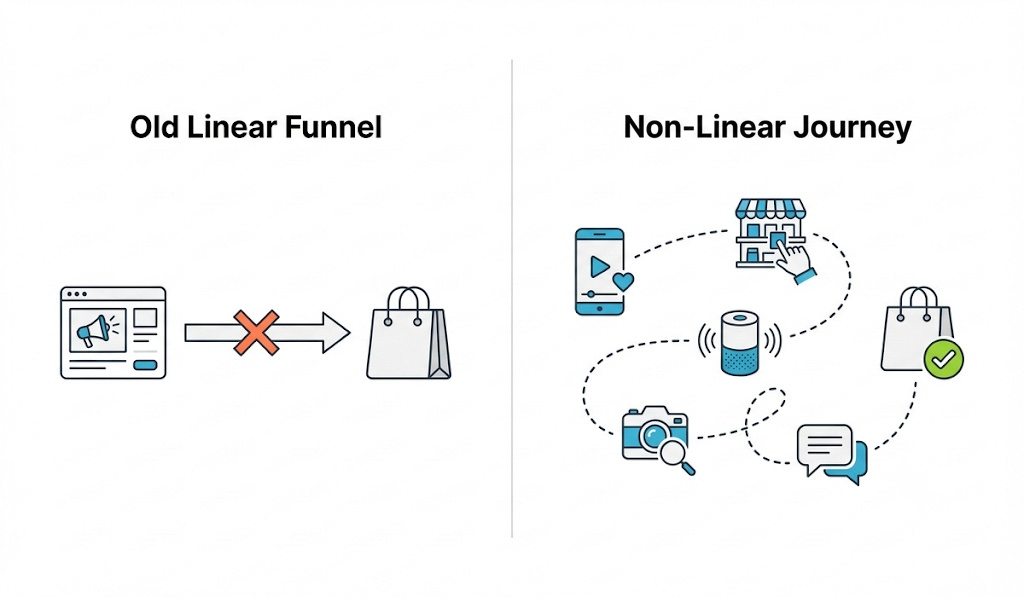
As the customer journey occurs across apps, physical stores, and social media, traditional metrics (e.g., page views, link clicks) are not enough. To track these multi-channel habits, growth hackers now focus on two specific data entities:
Intent Velocity
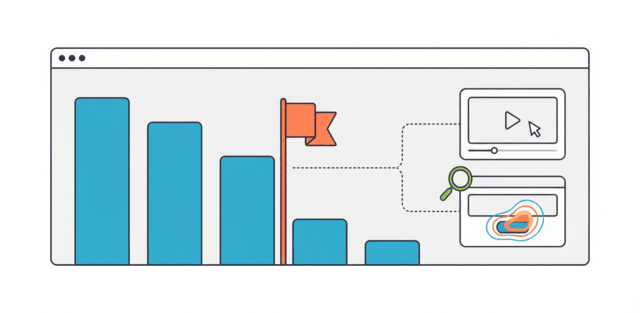
Intent velocity measures the speed at which a customer moves from first discovering a product to completing their purchase. In 2026, high intent velocity is a key goal for growth hackers. If a shopper stalls or slows down during their journey, it often signals a technical hurdle or a lack of information that needs to be addressed. By tracking this speed, brands can identify exactly where the friction is and fix the experience in real-time to keep the customer moving forward.
Sentiment Scarcity
Sentiment scarcity uses AI to identify gaps in trust or negative sentiments that might disrupt a sale from happening. This tool scans for moments where a customer feels uncertain, perhaps because they cannot find the reviews, ratings, or product information they need to feel confident. By identifying this scarcity in positive sentiment, companies can proactively provide the reassurance (such as a testimonial, social proof, or a live chat prompt) needed to close the deal before the customer switches to a competitor.
Businesses must also make sure their websites respond quickly and reliably, especially on mobile, so that technical friction does not interrupt the purchase journey.
Speed and Scalability are Important for Converting Mobile Consumers
In 2026, the technical health of a website is no longer just an IT concern—it is a direct driver of sales. As consumer attention spans hit new lows, the infrastructure of an online store must be built for instant response. High-performing brands are moving away from traditional, bulky website designs in favor of modular systems that prioritize mobile efficiency and rapid content delivery.
The 1.2-Second Standard
Site speed is critical for converting mobile shoppers, who now represent the majority of online sales. In 2026, every 100ms of latency beyond a 1.2s Time to Interactive (TTI) correlates to a 7% drop in Intent Velocity and impacts up to 1% in sales. If the site doesn't respond almost instantly, the shopper's momentum breaks, and they are likely to abandon the purchase.
Headless Commerce
To meet these strict speed demands, brands use Headless Commerce. This architecture separates the head (the part of the website the customer sees) from the body (the back-end systems for payments and data).
By decoupling these two, brands can make instant updates and launch localized stores without the technical delays or "lag" found in older systems.
Progressive Web Applications (PWAs)
Progressive Web Applications (PWAs) provide the high-speed experience needed to browse large product catalogs on mobile devices. Because they function like an app but live in a web browser, they offer superior performance and reliability. PWAs help brands support the speed needed for large product catalogs.
For example, Just Sunnies saw 75% of their sales come from mobile in 2023 after improving performance with a PWA.
Additionally, Movora reported in 2025 that their site became 100% faster on mobile after switching to a flexible architecture.
How to Use Growth Hacking Automation to Influence Consumer Behavior
Automation allows brands to trigger immediate responses based on real-time behavior. Instead of static campaigns, companies use predictive systems to anticipate what a customer needs.
For instance, MAC Cosmetics in an InsiderOne 2026 case study reports 17.2x ROI and a 20.56% increase in add-to-cart rate after using AI-powered Smart Recommenders and Instagram-style stories for personalization on their website. This shows how brands benefit from using data to improve their customer experience.
Consumer Behavior Analysis Tools in 2026
For these automated responses to work, businesses first need tools that can interpret customer activity, predict future behavior, and flag signs of dissatisfaction. Brands in 2026 rely on the following categories of technology.
Why Shoppers Abandon Online Carts
Shoppers leave when they face high costs, missing reviews, or conflicting details. In 2026, buyers often check multiple apps and physical stores at once. If your data doesn't match across these places, customers lose trust. Transparency and consistent information are crucial to finishing a sale.
Shoppers in 2026 have high standards for every digital and physical shelf. When a brand fails to meet these needs, the customer walks away. Major reasons for abandonment include:
- Price Friction
High costs are the top reason for lost sales, driving 46% of cart abandonment according to Salsify 2026 Consumer Research. It usually involves hidden fees like shipping or taxes that appear only at checkout. - Trust Gap
Modern buyers are wary of fake products and AI-generated text. Shoppers will quit a purchase if they see no ratings or poor-quality reviews. - Mismatched Data
Shoppers move between apps and stores constantly. They expect the same facts everywhere. If a price on a website is different from the price in the store, this causes friction that leads to early exits. - Content Errors
Bad product descriptions lead to more than just a lost sale. Incorrect page content causes online returns as consumer expectations are mismanaged. - Data Security Hesitation
People shopping on phones are very careful about their data. Sales stop immediately if a site lacks clear security or familiar payment options.
How to Reduce Cart Abandonment in 2026
To keep shoppers, brands must sync all data and provide clear proof of quality. Use a step-by-step approach to remove digital and physical friction. By matching prices across all platforms and offering fast, secure mobile payments, you build the trust needed to close the deal in 2026.
Step 1: Sync All Channel Data
Ensure your pricing, descriptions, and stock levels are identical across platforms, including website, social media, and physical storefronts. This stops the confusion that happens when shoppers compare your app to your shelf.
Step 2: Use AI for Guided Shopping
Install AI-driven assistants to act as digital sales helpers. These tools offer personalized suggestions to keep users engaged. You can also use AI models to send quick, friendly reminders if a user leaves a cart behind.
Step 3: Show Clear Social Proof
Shoppers look for real, human voices to beat the AI trust gap. Add customer ratings and photos from real buyers to every product page. Authentic peer reviews are the best way to prove your product is worth the price.
Step 4: Fix the Mobile Checkout
Mobile users add items to carts often but rarely finish the sale. Fix this by offering one-click buying and guest checkouts. Using digital wallets like Apple Pay or Google Pay also makes the process faster and more secure.
Step 5: Prove Your Values
As shoppers pay more for sustainable goods, prove your claims with real-time tracking or transparent product cycles.
Step 6: Use Phygital Tools
Reduce the fear of a bad purchase with technology that blends physical and digital (phygital) tools. For instance, using AR virtual try-ons or QR codes in stores that link to digital guides. These tools give buyers the nudge they need to click buy.
Values-Driven Spending and Lifestyle Choices
Modern shoppers choose products based on ethics, sustainability, and personal health goals. Brands can build instant trust by integrating real-time supply chain tracking to show proof of ethical sourcing.
Company Health Checklist: Is Your Growth Engine Ready?
To succeed in 2026, companies must evaluate their data, speed, and automation capabilities against modern consumer standards. This checklist helps determine if a brand is prepared to handle non-linear shopper journeys and value-driven spending.
- Is there one single place where all customer info (including website visits, app usage, and email interactions) is kept?
- Does the website load fast on existing consumer devices?
- Are messages personalized based on consumer behavior and interest?
- Is it easy for customers to find reviews and ratings on product pages for social proof?
Final Thoughts
Growth in 2026 is defined by how well a brand can predict and meet the shifting needs of its customers. By moving away from static campaigns and embracing unified data, you can build a growth engine that scales automatically while maintaining consumer trust.
Next Steps:
- Audit Your Speed: Ensure your mobile site loads instantly to prevent cart abandonment.
- Centralize Your Data: Implement a CDP to combine your app, web, and store data into one place.
- Launch Predictive Tools: Start using sentiment analysis to identify and help frustrated customers before they leave.
- Prioritize Transparency: Use interactive tools to give consumers control over their data, closing the trust gap.
Frequently Asked Questions (FAQs)
What is a non-linear consumer journey?
It means shoppers no longer follow a straight path from seeing an ad to buying a product. In 2026, a customer might see an item on social media, visit a physical store to see it, and then complete the purchase via a chatbot.
How does headless commerce help my business?
It separates your website's front-end (consumer-interactive) display from its back-end (payment channels, billing) data. This allows your site to load much faster on mobile devices and lets you update content or launch new stores without technical delays.
How does social commerce impact the shopping journey?
Social media is now a primary storefront rather than just a discovery tool. Shoppable videos and live-stream events allow customers to move from discovery to checkout instantly without leaving the app.
Related Content
Read These Next
Conversion Rate Optimization for Lead Generation: 7 Tactics That Fill Your Pipeline Faster