
Mobile Conversion Rate Optimization: 7 Tactics to Fix the Mobile Funnel Gap




Successful Mobile CRO requires reducing interaction latency, placing CTAs in the thumb zone, and implementing one-click digital wallets. Brands must bridge the gap between discovery and purchase by integrating social commerce checkout and using AI-driven agentic commerce to personalize user journeys based on intent.
Key Takeaways
- Desktop environments currently maintain conversion rates between 4.8% and 5.06%, while mobile devices lag at 2.49% to 2.9%.
- Placing primary CTA buttons within the thumb zone reduces user frustration, while foldable layouts and haptic feedback help mobile interfaces feel easier and more responsive.
- Implementing guest checkout and digital wallets such as Apple Pay, Google Pay, PayPal, and Shop Pay prevents cart abandonment by streamlining final purchase steps.
- Success in 2026 requires linking social commerce, AI-driven personalization, privacy-safe attribution, and physical retail touchpoints into a unified experience.
Closing the Mobile and Desktop Conversion Rate Gap
The performance divide between desktop and mobile environments stems from technical friction and different browsing habits. According to Upskillist in 2025, desktop environments maintain a conversion rate of 4.8% to 5.06%, while mobile devices range from 2.49% to 2.9%. Fixing this gap means making it easier to buy on small screens.
Device Influence on Performance and Behavior
The type of device a person uses changes how they buy. While computers remain the choice for nearly half of all actual sales, mobile devices are the primary tools for the early stages of a purchase:
- Discovery Trends: According to the WARC Global Advertising Expenditure Report (2026), approximately 29% of Gen Z consumers start their shopping journeys on social media using mobile devices.
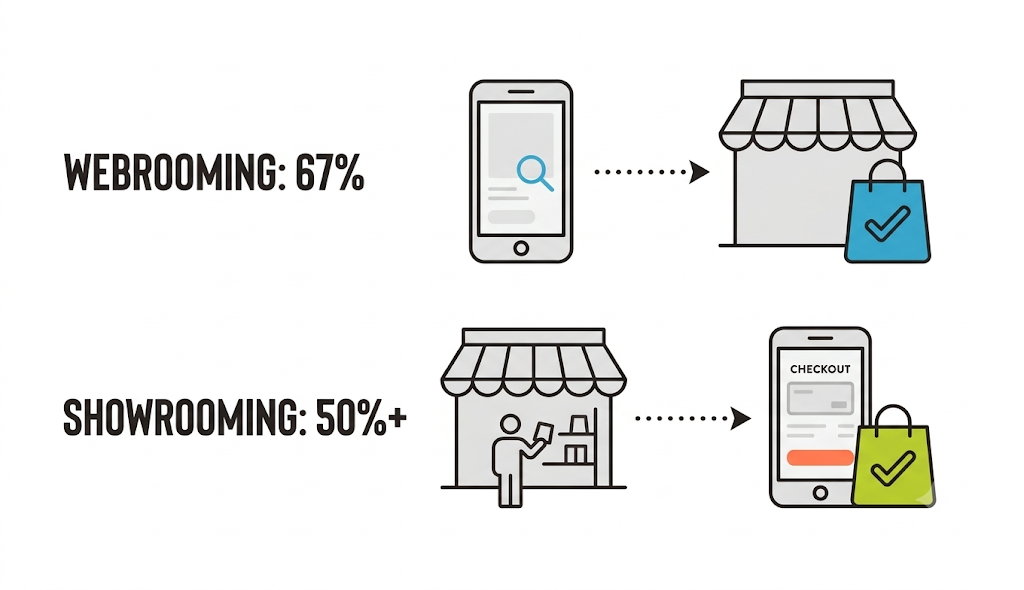
- Webrooming: The Salsify 2026 Consumer Research shows that 67% of shoppers research an item on a phone before buying it in a physical store.
- Showrooming: Over 50% of people check a product in person at a store before buying it later through a mobile website, according to the Salsify 2026 Consumer Research.
- Research Channels: The Digital 2025: Global Overview Report indicates adult internet users spend an average of 6 hours and 38 minutes online daily, primarily via mobile.
Testing a website on a real smartphone is the only way to find small flaws, like buttons that are too close together, that stop a sale. Based on Growsurf's Customer Acquisition Cost Stats (2026), acquisition costs are up 60% over five years, making every mobile visitor essential for profit. Mobile optimization is the primary way to protect profit margins in 2026.
7 Proven Mobile CRO Tactics to Fix Funnel Gaps in 2026
Fixing mobile funnels requires technical speed, easy design, and automated payments. These tactics use AI and social commerce to turn visitors into buyers with less effort.
1. Reduce Page Load Times and Interaction Latency
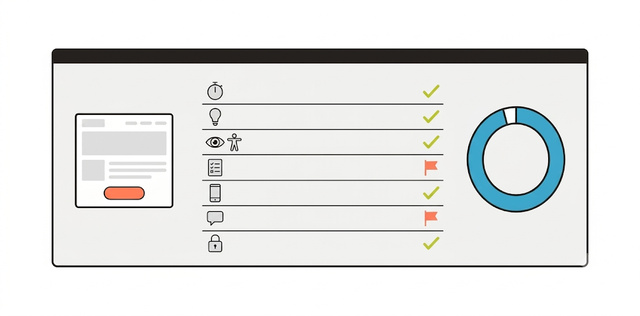
Faster websites keep visitors from leaving. Interaction latency is the delay between a user's tap and the page's visual response. Shopify claims in 2026 that a one-second delay in page load time can reduce conversion rates by up to 7%. Fixing this involves meeting 2026 technical standards to ensure the site feels instant and stable.
Faster mobile experiences keep visitors from abandoning the funnel. Page load time measures how long it takes for the page’s main content to appear after a user opens it. Interaction latency, by contrast, measures how quickly the interface responds after the page has loaded, such as the delay between tapping “Add to Cart” and seeing the button change, drawer open, or checkout step advance. A page can load quickly but still feel broken if taps, swipes, filters, or checkout buttons respond slowly.
According to Shopify’s 2026 ecommerce CRO benchmark roundup, the average ecommerce conversion rate is at ~2.76%. This gives brands a useful baseline, but the real CRO opportunity is identifying where mobile shoppers still experience friction across speed, checkout, product discovery, and payment flows
Case Study: MasterCraft
MasterCraft used a digital experience optimization program to fix its technical infrastructure. The brand faced low engagement despite high site traffic. By reducing interaction latency and improving stability, the company achieved a 33:1 return on investment.
2. Place Interaction Elements in the Thumb Zone
Placing buttons where they are easy to reach increases sales. The mobile thumb zone refers to the specific areas of a phone screen that can be comfortably touched with one hand. Moving primary actions into this zone reduces user effort and frustration.
In 2026, mobile UX also needs to account for foldable devices, where screen posture changes the reachable area, and haptic feedback, where subtle vibration confirms taps, selections, and payment actions. These details matter because mobile shoppers often make decisions one-handed, while walking, commuting, or switching between social apps and product pages.
Case Study: New Balance Chicago
New Balance Chicago used the Unbounce platform to build mobile-first landing pages. The brand struggled with low engagement on small screens. By moving call-to-action buttons into the reachable thumb zone and simplifying layouts, the company significantly increased mobile sign-ups.
The same principle applies beyond standard smartphones: on foldables, CTAs should adapt to the active screen area, while haptic cues can reassure users that taps and checkout actions have registered.
3. Add One-Click Payments and Guest Checkout Options
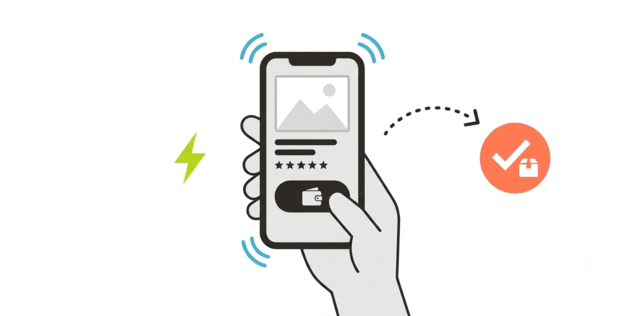
Removing steps in the payment process stops people from quitting a purchase. Guest checkout allows people to buy without creating a permanent account, while digital wallets such as Apple Pay, Google Pay, and Shop Pay let customers confirm payment with a tap, biometric authentication, or saved credentials.
For mobile-first builds, teams can also use Progressive Web Apps (PWAs), React Native, or platform-native checkout components to make repeat visits, saved carts, and payment flows feel faster.
Case Study: Intertop
Intertop utilized a website redesign process to streamline the mobile checkout funnel. The company faced high cart abandonment because of complex steps. By removing extra form fields and making navigation simpler, the redesign increased the total conversion rate by 55%.
4. Use AI Personalization and Agentic Commerce
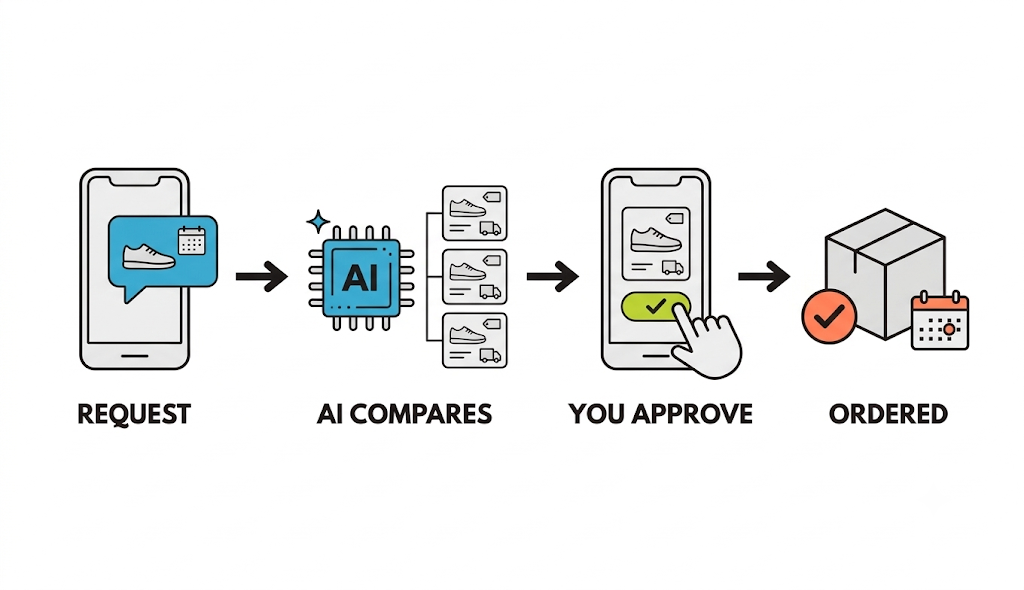
Showing the right product at the right time boosts revenue. AI personalization uses computer systems to show content based on a user's past choices. Agentic commerce is a buying model where AI agents act on behalf of shoppers to research, compare, select, and sometimes complete purchases with minimal human input.
For example, a shopper might tell an AI assistant, “Find running shoes under $150 that arrive by Friday,” and the agent could compare products, check availability, apply preferences, and complete the order after approval.
AI personalization uses behavioral, contextual, and intent data to show the most relevant product, offer, or landing page. In mobile CRO, this matters because the shopper may not browse a full catalog; they may arrive through search, social, chat, or an AI assistant and expect the page to match their intent immediately.
Case Study: World of Wonder
World of Wonder used Unbounce Smart Traffic and AI optimization tools to increase subscriptions. High traffic volume was not leading to enough sales. The AI system automatically sent visitors to the best-matching landing page, resulting in a 20% increase in conversions.
5. Enable In-App Checkout Through Social Commerce Platforms
Selling where people already spend time reduces friction. Social commerce is the process of buying products directly inside social media apps. This keeps shoppers from having to leave the app to finish a purchase. According to eMarketer U.S. Social Commerce 2026 Forecast, U.S. social commerce sales are projected to surpass $100 billion by 2026.
Case Study: Synthesia
Synthesia used Zapier to automate Facebook Conversions API events. The brand faced unqualified leads and poor targeting. By sending real customer actions to the social platform, the brand achieved 4X faster testing and improved conversion visibility.
6. Feature High-Quality Product Content and Social Proof
Clear images and evidence of quality make shoppers feel safe. Social proof refers to things like customer reviews and ratings that show others like the product. Detailed visuals are essential, as 50% of Gen Z shoppers trust brands specifically due to high-quality product content, according to the Salsify 2026 Consumer Research.
Case Study: Xerox
Xerox used product page user experience optimization to build trust. The problem was a lack of clear information for complex products. By improving visual content and proof elements, the company achieved an 18.9% increase in revenue.
7. Connect Physical and Digital Shopping Touchpoints
Merging real-world and online experiences meets modern expectations. A touchpoint is any way a person interacts with a brand. Linking physical store displays to mobile product pages helps shoppers research quickly.
Case Study: Catalina Crunch
Catalina Crunch implemented an omnichannel strategy to connect online discovery with retail sales. The brand needed to link digital ads with physical store availability. This alignment led to significant revenue growth across all shopping platforms.
Conversion Factors Beyond Device Optimization
Success in a digital store requires more than just a fast website or a mobile-friendly layout. Total conversion rate optimization depends on trust, information accuracy, and shared values.
- Influence of Brand Trust on Purchase Decisions
Loyalty significantly impacts revenue. Shoppers paid more for a product because they trust the brand. Maintaining this trust through consistent experiences is critical for long-term profit.
- Risks of Inaccurate Product Information
Wrong details cause shoppers to leave or return items. Based on the Salsify 2026 Consumer Research, 45% of consumers returned an online purchase in 2025 because the product content was incorrect. Consistency across all sales channels prevents these losses.
- Value of Customer Reviews and Ratings
Public feedback acts as a primary signal of quality. Most shoppers use positive reviews and ratings to decide if a product is worth the price.
- Growth Through Shared Personal Values
Shoppers prefer brands that mirror individual beliefs. Consumers are more likely to buy from companies that reflect personal values. Clear communication about brand ethics is now a conversion necessity.
- Impact of Security and Data Privacy
Safety concerns stop shoppers from finishing a purchase. Payment security worries are one of the top reasons for cart abandonment. Providing a secure experience builds the confidence needed to convert visitors.
Mobile CRO in 2026 is harder because tracking signals are less reliable across browsers, apps, and devices. Even though Google changed course on its full third-party cookie phaseout in Chrome, brands still face fragmented measurement from user privacy settings, consent requirements, app tracking limits, blocked cookies, and privacy-preserving attribution systems. Google’s Attribution Reporting API, for example, is designed to measure ad clicks and conversions without relying on third-party cookies or tracking individuals across sites, using aggregation, anonymization, limited data sharing, and noise. This means CRO teams should rely more on first-party data, server-side tagging, consented analytics, incrementality testing, and platform conversion APIs instead of assuming every mobile action can be tracked perfectly.
Final Thoughts
To capitalize on mobile traffic and protect profit margins, organizations should prioritize the following actions:
- Use real smartphones, foldables, and mobile network conditions to identify page load issues and interaction latency.
- Remove unnecessary form fields and integrate one-click payment options like Apple Pay, Google Pay, WeChat Pay, PayPal, and Shop Pay.
- Use automated tools to match visitors with the most relevant landing pages or products based on intent, including AI-assisted and agentic shopping journeys.
- Strengthen first-party measurement, consented analytics, server-side tagging, and conversion APIs to offset mobile tracking gaps.
- Ensure all product descriptions and images are accurate, as incorrect content is a leading cause of returns.
- Feature high-quality visuals, reviews, and trust signals to build the confidence necessary for conversion.
Frequently Asked Questions (FAQs)
Why is there such a large gap between mobile and desktop conversion rates?
The divide stems from technical friction, such as interaction latency, and the fact that mobile screens make complex navigation difficult. While many users research products on phones, nearly half of all actual sales still occur on computers.
What is the "thumb zone" and why does it matter for sales?
The thumb zone is the area of a smartphone screen that a user can reach comfortably with one hand. Moving buttons into this area reduces the effort required to buy, which can significantly boost engagement and mobile sign-ups.
How does social commerce impact the mobile funnel?
Social commerce allows users to buy products directly within social media apps. This prevents shoppers from leaving the app to finish a purchase, reducing friction in the market.
Read These Next

How to Build Automated Growth Hacking Tools in 2026