.png)
Omnichannel Marketing Automation: Step-by-Step Implementation Framework
.png)

.png)

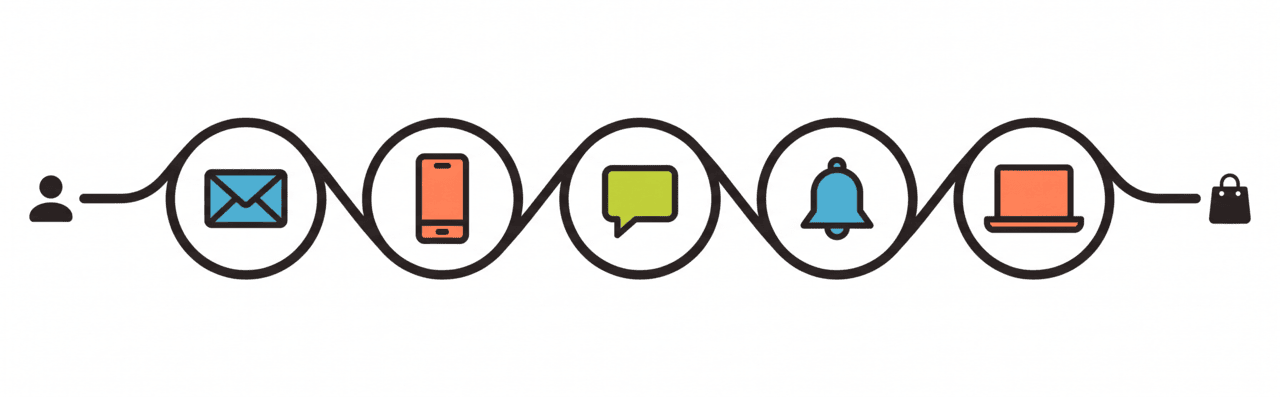
Omnichannel marketing automation connects customer data and activity from all channels — such as email, SMS, CRM systems, and websites — into one central platform. Unlike multichannel marketing, where channels work separately, omnichannel automation uses real-time customer behavior to deliver a consistent and personalized experience across every touchpoint.
What Is Omnichannel Marketing Automation and How Is It Implemented?
Omnichannel marketing automation is the infrastructure that connects customer data, channel delivery, and behavioral logic into a single system where a customer's action on one channel instantly triggers a relevant response on another.
Implementation follows six sequential steps:
- Data unification
- ICP and journey mapping
- Channel architecture
- Automation logic build
- Measurement design
- Continuous optimization
Key Takeaways
- Omnichannel automation is customer-centric, not channel-centric. The channels are delivery mechanisms connected to a unified data system, not independent campaigns running in parallel.
- The single biggest reason omnichannel strategies fail is not a lack of tools but a lack of unified customer data. Automation cannot personalize a relationship with a customer it does not recognize across touchpoints.
- Multichannel marketing and omnichannel marketing are structurally different. Multichannel operates in silos. Omnichannel orchestrates a consistent, connected experience across all of them simultaneously.
- Privacy regulations globally — including the EU's GDPR, Australia's Privacy Act, and US state-level frameworks like the CCPA/CPRA — require consent management to be built into the architecture from the start, not added after deployment.
- Platform-reported attribution across multiple channels will consistently overcount conversions. CRM-verified revenue is the only accurate measure of omnichannel performance.
How Omnichannel Automation Differs from Multichannel Marketing
Omnichannel marketing automation and multichannel marketing are frequently treated as synonyms. They are structurally different approaches with different data requirements and significantly different performance outcomes.
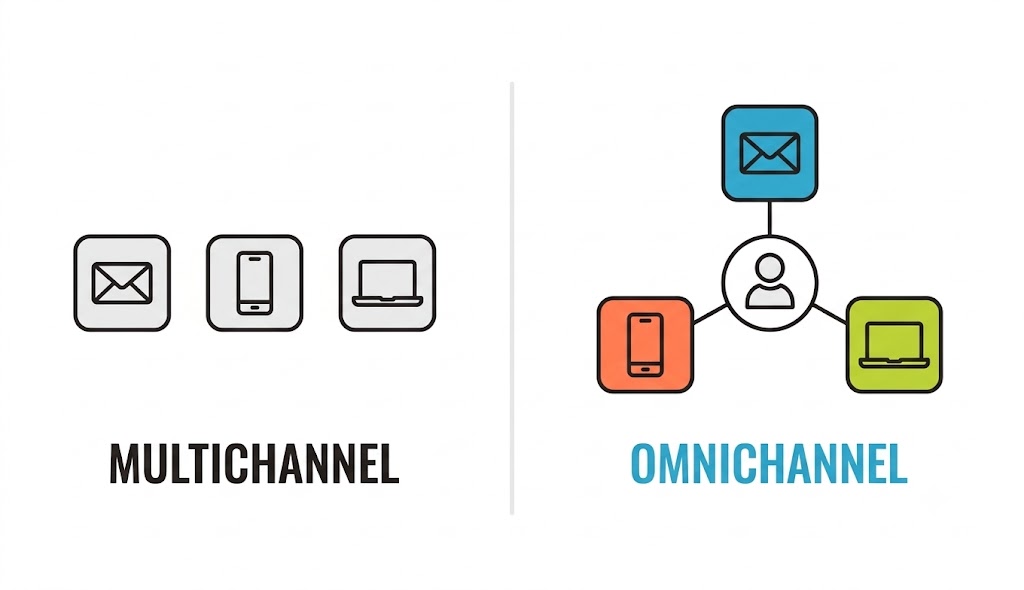
Multichannel marketing is channel-centric. Each channel operates with its own strategy, audience logic, and performance metrics. The channels do not communicate. A customer who receives an email promotion and then visits the website from a paid search ad is treated as two separate interactions. The customer experiences inconsistency. The marketing team sees fragmented data.
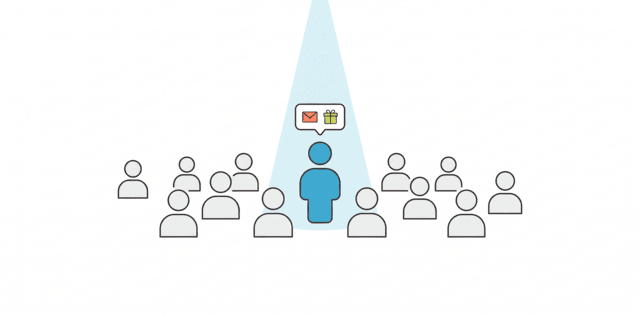
Omnichannel marketing is customer-centric. The customer's identity, behavior, and journey state are unified in a single profile. When they abandon the cart and open a social app twenty minutes later, the retargeting ad reflects the exact product they left behind.
Multichannel marketing can be implemented incrementally with minimal integration. Omnichannel automation requires a unified data layer as a non-negotiable prerequisite.
Step 1: Unify Customer Data Across All Touchpoints
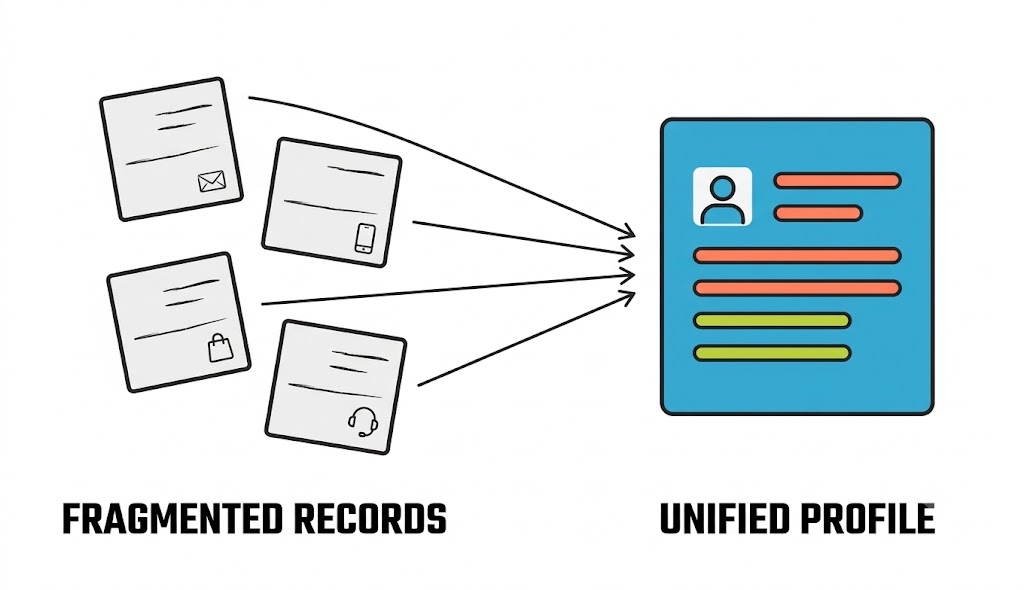
Data unification is the prerequisite for every subsequent step. Without a single, consolidated customer profile that recognizes the same individual across email, web, mobile app, SMS, paid media, and in-store interactions, no automation trigger can be personalized accurately.
What the fragmented stack typically looks like before unification:
- An email platform managing newsletters and promotions
- A separate SMS tool like Twilio
- A CRM like Salesforce or HubSpot with purchase history, but not browse behavior
- An ad manager with retargeting audiences built from pixel data
- A customer support system disconnected from all of the above
A VIP customer who spent $800 last month is treated as an unknown visitor on the website — because the personalization layer has no connection to the CRM.
A Customer Data Platform (CDP) — such as Twilio Segment or Tealium — aggregates data from every source into a unified 360-degree customer profile combining:
- Zero-party data: preferences shared through tools like Typeform or Octane AI
- First-party behavioral data: clicks, views, session time, purchase history
- Transactional data: from the CRM
Identity resolution — matching email addresses, phone numbers, and device identifiers across systems — is what makes unification reliable at scale. Without it, the same customer appears as multiple records and automation fires inconsistently.
The implementation sequence for data unification:
- Audit all existing data sources
- Identify which CDP connects to each of them
- Define the standard customer identifier (email or phone number) that links records across systems
- Validate the unification layer before building any automation workflows on top of it
Phone number has higher match rates in mobile-heavy markets across APAC, making it the preferred primary identifier for regional deployments.
Step 2: Map the Customer Journey and Define Trigger Logic
Journey mapping identifies the behavioral signals that indicate where a customer is in their decision process. Trigger logic translates those signals into automated responses.
Five behavioral states matter for omnichannel automation: new visitor (unknown, no profile), identified lead (email captured, no purchase), active customer (recent purchase), at-risk customer (declining engagement), and lapsed customer (beyond the normal purchase window). Each state has distinct behavioral signals that indicate transition, and each transition should trigger a different automation response.
A new visitor who views a product category three times in one session is showing different intent than one who bounced after reading a blog post. Treating both the same way wastes the behavioral signal the session generated.
For SMB teams building this for the first time, start with three to five journey states and one to two triggers per state. An overly complex trigger map built on incomplete data produces automation that fires incorrectly more often than correctly.
Step 3: Define the Channel Architecture
The channel architecture defines which delivery mechanisms the automation system uses, how they are prioritized, and how they coordinate without creating frequency conflicts.
Email remains the highest-ROI channel in most omnichannel stacks: low marginal cost per send, high personalization capability, and strong deliverability when list hygiene is maintained.
SMS produces significantly higher open rates than email. According to SimpleTexting's 2024 SMS marketing benchmark report, SMS open rates reach 90 to 98% compared to 20 to 30% for email. However, SMS requires explicit opt-in consent, making it most effective for customers who have actively subscribed and most legally constrained for new contacts in GDPR and Privacy Act markets.
Push notifications have high reach for customers with the mobile app installed, zero marginal send cost, and no inbox competition — but require the app to be installed and notification permissions to be granted.
Paid retargeting reaches customers across social and display environments using first-party audience data. Signal quality has degraded as third-party cookie deprecation and iOS privacy restrictions reduce observable behavior. Server-side tracking protocols — such as Google Tag Manager Server-Side and Meta's Conversions API (CAPI) — are now the baseline requirement for maintaining retargeting accuracy.
Email and web personalization can be activated earliest because they require the least consent infrastructure. SMS and WhatsApp require explicit opt-in records and suppression lists before they can be used legally in most markets.
Step 4: Build the Automation Workflows
A functioning omnichannel automation system requires five foundational workflows:
- Welcome and onboarding — first 72 hours after contact capture
- Behavioral re-engagement — triggered by declining engagement signals
- Cart and browse abandonment recovery — triggered within 30 to 60 minutes of abandonment
- Post-purchase lifecycle — replenishment, cross-sell, upsell sequences
- Win-back for lapsed customers — triggered at the vertical-appropriate inactivity threshold
Each workflow must use the shared customer profile as its data source. Global frequency capping across all active workflows is non-optional. Without it, a customer triggering cart abandonment, browse abandonment, and a promotional broadcast within 48 hours receives four to six automated messages in two days — accelerating unsubscribes and damaging deliverability.
Behavioral sequences consistently produce 15 to 30% higher conversion rates than time-based sequences at equivalent send volume. They advance contacts only when they engage and pause when they disengage — responding to expressed intent rather than assumed readiness.
Step 5: Design the Measurement Infrastructure

Omnichannel automation performance should be measured against CRM-verified revenue, not platform-reported conversion figures. Every channel credits itself with conversions influenced by multiple touchpoints simultaneously.
An email platform credits the cart abandonment email. The retargeting platform credits the display ad seen one hour later. The SMS platform credits the text sent the following morning. All three may have contributed — only one transaction occurred. Platform-reported revenue across the three channels will sum to more than the actual order value.
First-party data, consented analytics, and server-side tracking form the technical foundation for accurate measurement as third-party signal quality continues to decline.
Step 6: Optimize Continuously Using Feedback Loops
A self-optimizing omnichannel system uses performance data from each workflow stage to improve trigger logic, content, timing, and channel prioritization over time. The feedback loop operates at three levels:
- Message level: A/B testing of subject lines, content, and CTAs generates signals about what resonates
- Workflow level: Engagement rate by stage identifies where customers drop out
- System level: Cohort analysis quantifies incremental revenue from the full automation journey versus a control group
AI-assisted optimization adjusts send timing, channel sequencing, and content personalization at the individual level automatically. Bloomreach's Innovation Fest 2026 data reported 35% higher conversion rates, $10,000 more revenue per campaign, and 82% fewer sends through AI-driven optimization.
What Are the Most Common Implementation Challenges?
Most omnichannel automation challenges occur at the data layer or the integration layer, not at the campaign execution layer.
- Data silos persisting after CDP implementation. Sources not integrated into the CDP continue operating independently. An in-store POS not feeding transaction data to the CDP means in-store purchasers are invisible to the automation system. A customer who lodged a complaint yesterday may receive a promotional upsell today.
- Consent management gaps. The EU's GDPR, Australia's Privacy Act, and US state-level frameworks like CCPA/CPRA require explicit, documented consent and govern data retention. Consent architecture must be built into the CDP and automation platform simultaneously — not treated as a separate compliance layer.
- Over-frequency from uncoordinated workflows. Adding new workflows without updating global frequency capping is the most operationally common failure mode. Unsubscribe rates above 0.3% per send reliably indicate broken frequency management.
- Attribution disagreements creating incorrect budget decisions. Platform-reported attribution used without CRM cross-referencing consistently exceeds actual revenue. Budget decisions on this basis over-invest in channels with aggressive attribution models and under-invest in channels contributing earlier in the journey.
When Should You Scale Omnichannel Automation Investment?
Scale when the foundational layer is stable: the CDP is receiving clean data from all material sources, the five core workflows are producing measurable incremental revenue above their operating cost, and attribution results align with CRM-verified revenue within a reasonable tolerance.
The sequencing that produces the most reliable long-term performance: data unification first, core workflows second, measurement infrastructure third, advanced optimization fourth.
Conclusion
Omnichannel marketing automation produces its strongest results when the six implementation steps are executed in sequence. Data unification is not a setup task that can be deferred — it is the foundation that determines whether every automated message is informed by the complete customer context or a fragment of it.
The organizations generating compounding returns are the ones that unified customer data before building automation on top of it, implemented consent management as an architectural requirement, and measure performance against CRM-verified revenue.
Frequently Asked Questions
What is the difference between omnichannel and multichannel marketing automation?
Multichannel operates independent campaigns with no shared data. Omnichannel connects all channels to a unified customer profile so each responds to the same behavioral signals.
What is a Customer Data Platform, and why is it required?
A CDP like Twilio Segment or Tealium aggregates customer data from all sources into a single unified profile. Without it, channels operate on fragmented data and cannot coordinate personalized responses.
How long does omnichannel automation implementation take?
A foundational implementation covering data unification, five core workflows, and basic attribution typically takes three to six months. Full omnichannel maturity takes twelve to eighteen months for most mid-market organizations.
What consent requirements affect omnichannel automation in APAC and Australia?
Australia's Privacy Act, GDPR for EU-resident customers, and US state-level frameworks like CCPA/CPRA all apply depending on customer location. Consent management must be integrated into the CDP and automation platform, not managed separately.
How do you prevent over-messaging?
Global frequency capping rules that limit total contact frequency across all active workflows. A contact qualifying for multiple simultaneous workflows should receive the highest-priority message, not all of them.
What does good omnichannel automation performance look like?
Welcome series conversion rates of 10 to 20%, cart abandonment recovery rates of 8 to 15%, and automation-attributed revenue representing 20 to 35% of total digital revenue for mature implementations.
Related Content
Read These Next
SaaS Marketing Automation: How to Generate and Nurture Leads at Scale